
NIO and UNDP extend clean-energy work in protected areas
The second Clean Parks agreement calls for more demonstration sites and explores finance for renewable power and electric mobility. Three protected areas were part of the first phase.
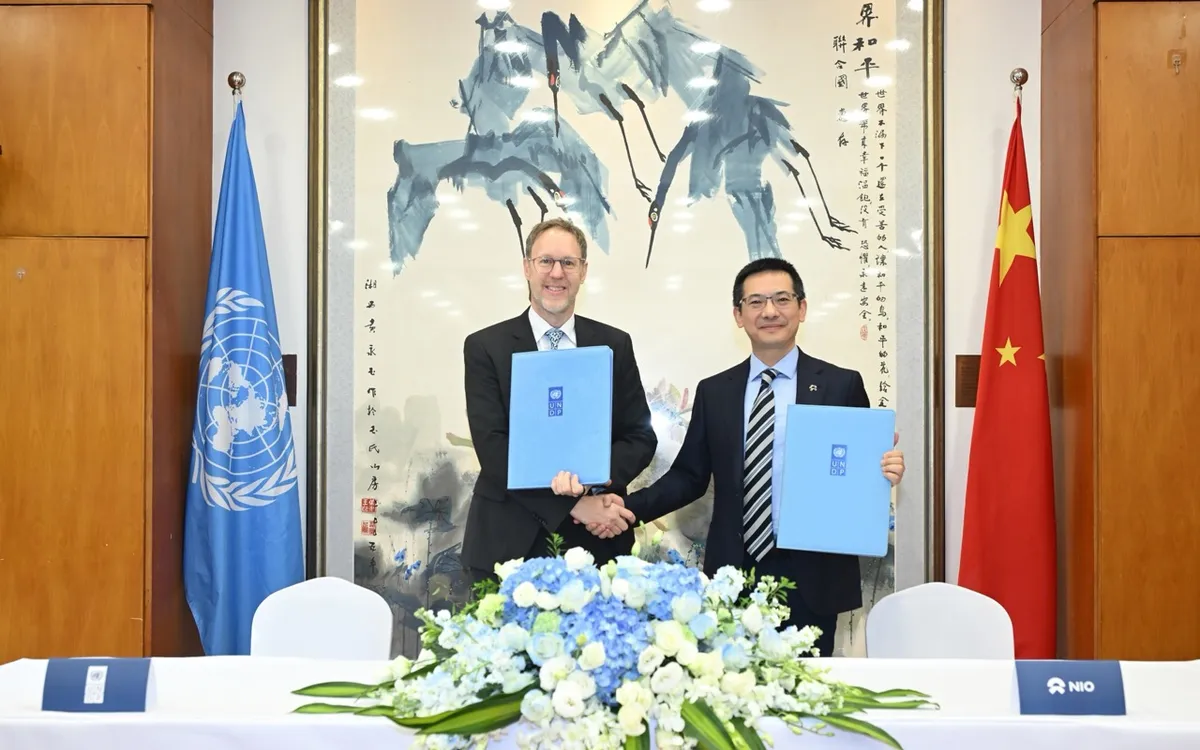
NIO and the United Nations Development Programme renewed their Clean Parks agreement on November 13 in Beijing, giving the partners a second phase to extend renewable power and electric mobility work in protected areas. UNDP resident representative Stefan Liller and NIO co-founder and president Qin Lihong signed the agreement. The partners plan to widen the demonstration network and use what they learn to develop low-carbon standards that other protected areas could follow.
The first phase provides a reference for what a new site might involve. UNDP identified Chongming Dongtan, the Qilian Mountains and the Yellow River Delta as the three protected areas where it and NIO put clean-energy or green mobility solutions in place. The first-phase installations included microgrids combining solar generation, battery storage and electric vehicle charging. NIO also identified electric patrol vehicles among the deployments. These applications need electricity for site operations and mobility, so supplying the vehicles and designing where they recharge are related parts of the work.
The list of first-phase sites is narrower than NIO’s Clean Parks programme as a whole. The company says the initiative began in 2022 and had launched 19 protected-area projects worldwide by November 2026, including five Chinese national parks. Those include Sanjiangyuan, Giant Panda and Wuyishan. The count covers projects across the initiative. The partners identified three sites in their account of phase one, and they did not say that all 19 have chargers or patrol fleets.
The second agreement puts greater emphasis on financing and sharing standards. UNDP says it will explore how green finance could support resilient cities and circular-economy projects as well as build capacity for biodiversity conservation. It also names projects involving women and young people. The partners released biodiversity guidance for the electric vehicle supply chain during the first phase. They now plan to refine renewable-energy and low-carbon operating practices so that park authorities can consider them at other locations.
For vehicle suppliers and charger operators, the clearer precedent is the first phase’s combination of site energy and patrol operations. The November agreement gives no second-phase list of parks, vehicle order or budget. A project in an individual park would still need requirements for its patrol routes, battery storage and available power before equipment is specified. The agreement sets out the next areas of joint work while leaving those site decisions open.