
Hyundai supplies 11 County EV bus platforms for Bali's first electric public transport pilot
Hyundai supplied 11 eight-metre County EV platforms and Laksana built the bodies for a Bali electric bus pilot launched on October 22. Hyundai lists a 128 kWh battery and a range of more than 200 km.
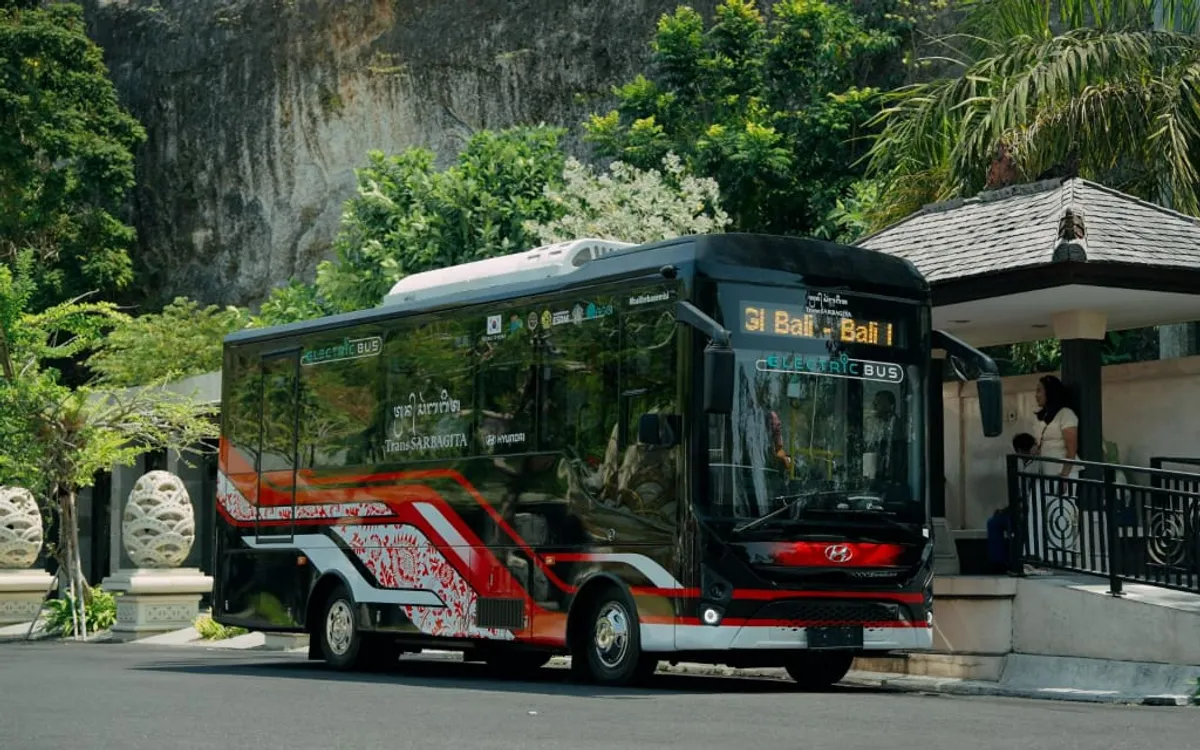
Hyundai Motor Company supplied 11 electric bus platforms for Bali's first electric public transport deployment, the company said on 23 October 2026, pairing its eight-metre County EV chassis with bodies built by Indonesian coachbuilder Laksana. The units were presented at the launch ceremony for the Bali Sustainable Transportation System project on 22 October. The Global Green Growth Institute led the programme with South Korea's Ministry of Climate, Energy and Environment and the Government of Indonesia.
The order follows a 2025 memorandum between the South Korean and Indonesian governments, with GGGI running the supply tender in the second half of 2025 and selecting Hyundai on vehicle quality, after-sales support and prior official development assistance transport work. Hyundai's Indonesian record includes 11 County EV buses placed in Surabaya public service in November 2024, so the Bali batch matches the number Hyundai supplied to Surabaya. The Surabaya units entered service roughly two years before the Bali launch.
Each Bali bus is a 20-seat mid-size model fitted with a 128 kWh battery and a claimed range of more than 200 km on a full charge. Hyundai did not disclose charging arrangements, depot power capacity or the route lengths the buses will cover. The 200 km figure is a manufacturer claim under test conditions and does not establish usable range on Bali's traffic and terrain, a distinction fleet operators will need to verify in service.
Hyundai will run a dedicated EV Bus Field Quality Assurance Programme during initial deployment, including a local field quality situation room that monitors vehicle quality and driving performance as service begins. The arrangement places Hyundai staff alongside the operator during early operation, an unusual commitment for an 11-unit order and a signal that the company is treating the pilot as a reference project for regional sales.
The commercial vehicle scope is narrow. Hyundai supplied platforms only; Laksana built the bodies, so the visible vehicle is a co-produced product rather than an imported complete bus. That structure keeps part of the value in Indonesia and positions Laksana as a local partner for future orders, though Hyundai did not state local content percentages or whether the arrangement carries any assembly commitment.
Hyundai named Jakarta, Semarang, Surabaya and Medan as targets for expanding its electrified commercial vehicle business in Indonesia, and said it plans to extend commercial vehicle electrification across Asia-Pacific markets. No volumes, timelines or contract values were given for those cities. The Bali pilot's procurement ran through GGGI rather than a commercial tender, so it does not by itself indicate private fleet demand.
GGGI frames the project as a public-private model for Asia-Pacific transport and part of Indonesia's greenhouse gas reduction effort. Hyundai's release gives no cost, subsidy or fare structure. The verifiable near-term output is 11 buses in service on Bali roads; whether the model scales to the named cities depends on procurement decisions not yet recorded.