
Renault puts €5,500 premium on 120 km of extra Trafic E-Tech range
Renault priced the 81 kWh Trafic Van E-Tech electric at €47,000 in France against €41,500 for the 60 kWh version, a €5,500 gap for 120 km more WLTP range. Orders for long-range versions open within weeks; comfort-range versions follow in early 2027.
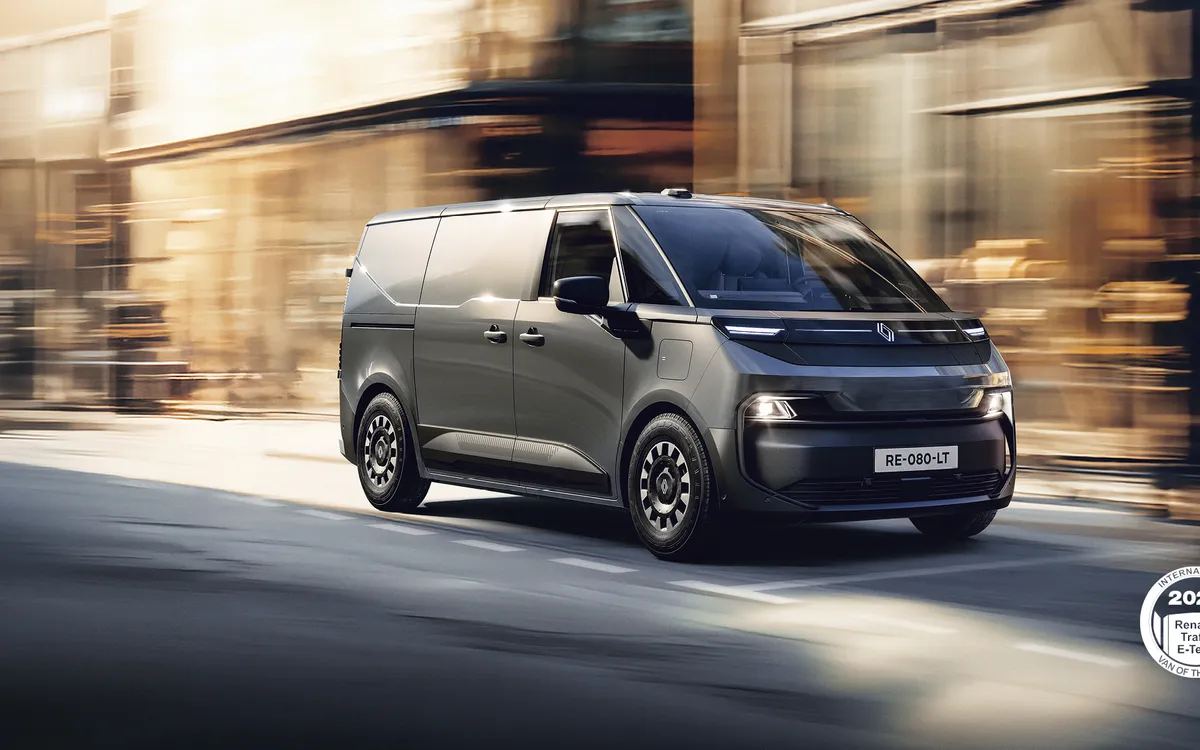
Renault on 12 October 2026 published French prices for the Trafic Van E-Tech electric, the electric version of its mid-size van, at the Paris Motor Show. In the ADVANCE trim, the 60 kWh comfort-range version starts at €41,500 including tax and the 81 kWh long-range version at €47,000. Renault says orders for the 81 kWh versions open in the coming weeks, while the 60 kWh versions arrive in early 2027.
The €5,500 difference buys 120 km of WLTP range: 470 km against 350 km, both figures subject to final homologation. Renault also quotes WLTP City figures of 690 km and 510 km. The larger battery takes 190 kW DC charging and adds 280 km of combined-cycle range in 20 minutes, or 380 km in urban use. Prices cover the L1 body with the AC11 charger; AC22 pricing comes later. The L2 body carries separate prices.
Renault claims total cost of ownership and cost in use up to 10% below a diesel van of similar size, attributing the gap to the 800V architecture and software-defined vehicle platform. The company also says an UPTIMIZE programme, scheduled to launch in 2027, will use real-time vehicle data and artificial intelligence to shift maintenance from reactive to proactive, with the stated aim of halving downtime after an incident.
The ADVANCE trim includes a heat pump, fast charging, bidirectional V2L, adaptive cruise control and a 12.3-inch media screen as standard. EXTRA adds automatic air conditioning, a mobile office, Google-built-in navigation and a second 230V socket in the load area, plus 10 side lashing points and a loading hatch for long items. Renault quotes 1.3 tonnes payload, 2 tonnes towing and three Euro pallets.
All versions share the LCV segment's new software-defined platform, which Renault says allows features to be added and updated over the vehicle's life, supporting residual values. Renault quotes combined consumption of 17.2 kWh/100 km and a CdA of 1.073, calling it the most efficient in its class. The van is built at Sandouville alongside the combustion Trafic on the same line, and factory-converted versions are due later in 2027.
The pricing sets a clear benchmark for fleet buyers: the €5,500 step to the long-range battery is about €46 per additional kilometre of WLTP range. For urban work, Renault positions the 60 kWh version as sufficient, citing 510 km WLTP City. Long-distance operators pay the premium mainly for 190 kW charging and the 470 km combined figure, which remains provisional until homologation.
Renault's cost claims rest on assumptions it has not itemised, including energy prices and duty cycles, and the UPTIMIZE savings depend on a 2027 launch. The Trafic was voted International Van of the Year 2027. Prices are French, include tax and exclude options and the AC22 charger, so cross-market comparisons require local lists.