
Renault 4 EV reaches 415 km and adds an LFP entry model
Aerodynamic changes extend the existing range while the new Jogging trim uses a separate battery and motor. The update also brings a second two-seat van conversion to six markets.
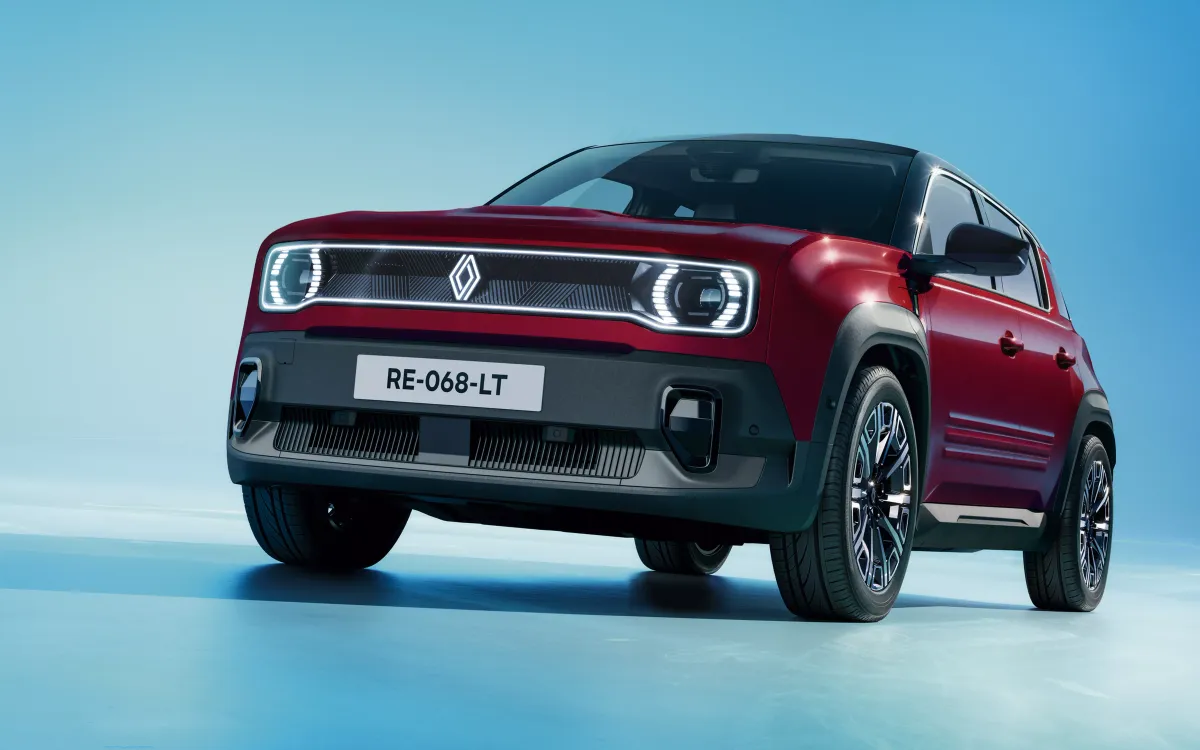
Renault has increased the certified range of its 4 E-Tech electric and plans to add a lower-specification version with a different battery by the end of 2026. The company disclosed the changes on 8 October ahead of the Paris Motor Show. Orders for the revised range start on 12 or 13 October, depending on the version and country. The forthcoming Jogging trim has a separate year-end timetable.
Renault attributes the changes to the existing 40 kWh and 52 kWh versions to revisions around the lower body and door mirrors. The 40 kWh Evolution, with its 90 kW motor, now reaches up to 310 km on the combined WLTP cycle. The 52 kWh version with a 110 kW motor is rated at up to 415 km. The Plein Sud version with an opening canvas roof is rated at 400 km with the same motor and battery. The test results put that roof choice 15 km below the highest advertised figure for the 52 kWh car.
The Jogging specification pairs an 80 kW motor with a lithium iron phosphate pack rated at 37 kWh, of which 36.5 kWh is usable. Renault quotes up to 305 km WLTP, five kilometres below the 40 kWh Evolution’s rating. Jogging comes with a 6.6 kW onboard AC charger and accepts up to 80 kW on DC. Renault says a 10% to 80% charge takes 25 minutes at a suitable DC charger. Across the range, drivers gain a reversing camera and can manually prepare the battery for a rapid-charge stop from the centre display.
A separate two-seat Extra conversion joins Renault’s existing Advance version for van customers in France, Spain, Austria, Germany, the Netherlands and Italy. Renault subsidiary Qstomize carries out the permanent conversion at Maubeuge. The rear seats and belts give way to a cargo tray with tie-down points, with a partition behind the cabin. It is homologated as an N1 light commercial vehicle. Renault reports 940 dm³ of cargo volume under the VDA measurement standard.
For van buyers, the battery decision also changes carrying capacity. The converted Extra can carry up to 360 kg with the 40 kWh pack and 330 kg with the 52 kWh pack. Extra adds navigation and more driver assists to the Advance specification. Those payload figures apply to the commercial conversion, while the WLTP ranges above describe the passenger cars.