
Daimler Buses unwraps second-generation eCitaro platform, sales from 2028
Daimler Buses showed a near-production prototype of its next Mercedes-Benz eCitaro in Munich on 10 November 2026, built on an all-new electric platform with LFP batteries and a 2028 market launch, ten years after the first eCitaro.
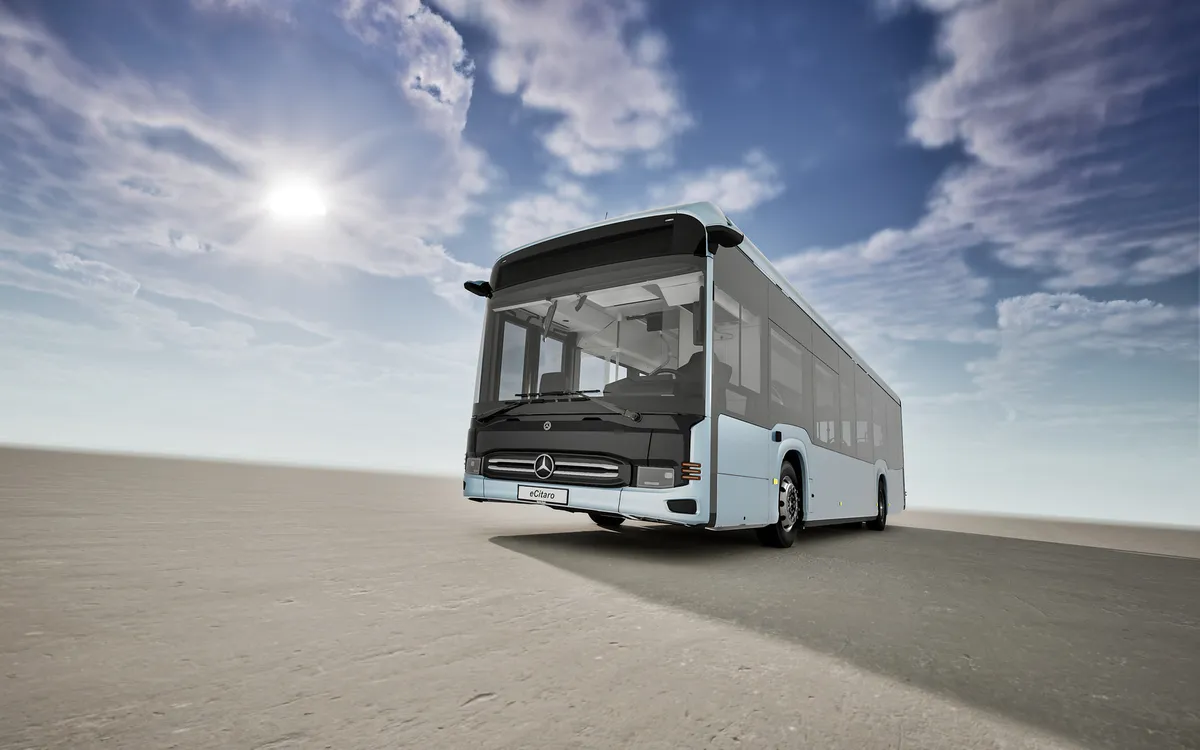
Daimler Buses presented the first near-production prototype of its next-generation Mercedes-Benz eCitaro at eMobility Days 3.0 in Munich on 10 November 2026. The company said the bus is developed from the ground up as an all-electric vehicle, replacing the current eCitaro that debuted in 2018. Series launch is planned for 2028, with the official world premiere set for Busworld Europe in Brussels in October 2027. Daimler frames the 2028 date as exactly ten years after the first eCitaro's world premiere.
The new platform spans a ten-metre solo bus to an 18-metre articulated bus and reuses components from the Mercedes-Benz Trucks portfolio adapted for bus duty. Daimler said the dedicated electric architecture cuts the articulated bus's unladen weight by around 750 kilograms. It cites a city bus with eight compact battery packs at around 13,050 kilograms, against around 13,800 kilograms for the current eCitaro with five NMC4 packs. Body changes include a roughly 42 mm sandwich roof versus 70 mm, trimming up to 100 kg on solo and 150 kg on articulated buses.
Battery chemistry shifts from NMC to LFP cells. The basic unit is a compact pack of about 50 kWh; solo buses can take six to twelve packs and articulated buses eight to fourteen, split between underbody and roof. Up to three charging interfaces, CCS2, pantograph and charging rail, support charging capacities up to 450 kW. The low-floor version uses ZF's AxTrax 2 LF portal axle at up to 360 kW system output, against roughly 280 kW peak on the current axle. A new MMTI system controls recuperation and braking per wheel in real time.
The low-entry version uses a central motor with the Mercedes-Benz RO 440 rear axle and reaches up to 100 km/h for interurban work. Daimler lists seven variants: three low-floor lengths at 10.63, 12.13 and 18.13 metres, and four low-entry lengths at 10.63, 12.34, 13.08 and 14.68 metres. The articulated bus now gets ESP for the first time, alongside Preventive Brake Assist 2, Sideguard Assist 2, Frontguard Assist and Attention Assist 2. Daimler said defined crash zones protect high-voltage hardware in the rear.
The thermal system, ThexMO, uses propane (R290) as refrigerant and draws on drivetrain waste heat. Inside, two 12-inch displays form the Multimedia Cockpit Interactive, and over-the-air updates can activate optional functions later. Removing the engine tower allows a full low-floor passenger compartment to the rear. Omniplus handles service, and Omniplus Charge covers charging infrastructure planning and operation, including brand-independent charging management.
Daimler's weight and output figures compare the new prototype with the current eCitaro, not with a production-spec successor; the company gives 2028 as the planned launch, so timings and specifications remain subject to homologation. The seven-variant count and pack ranges are stated for the prototype architecture. Daimler did not disclose pricing, order books or production volumes in the release.
For operators, the LFP shift and modular packs change depot planning: more, smaller packs mean charging strategy and roof load distribution need rework, and the 450 kW ceiling sets a target for depot and opportunity chargers. The 100 km/h low-entry variants widen the addressable market beyond city routes. Charging infrastructure and software are being sold separately through Omniplus Charge, which Daimler says already covers more than 100 projects across Europe.