
GAC and a Chinese research institute extend work on amorphous motor cores
Guangzhou Automobile Group signed a strategic research agreement on November 1, 2026 with the Chinese Academy of Sciences' Dongguan materials institute to develop amorphous materials for vehicle electric-drive systems, and listed three AION models as using its amorphous-alloy drive.
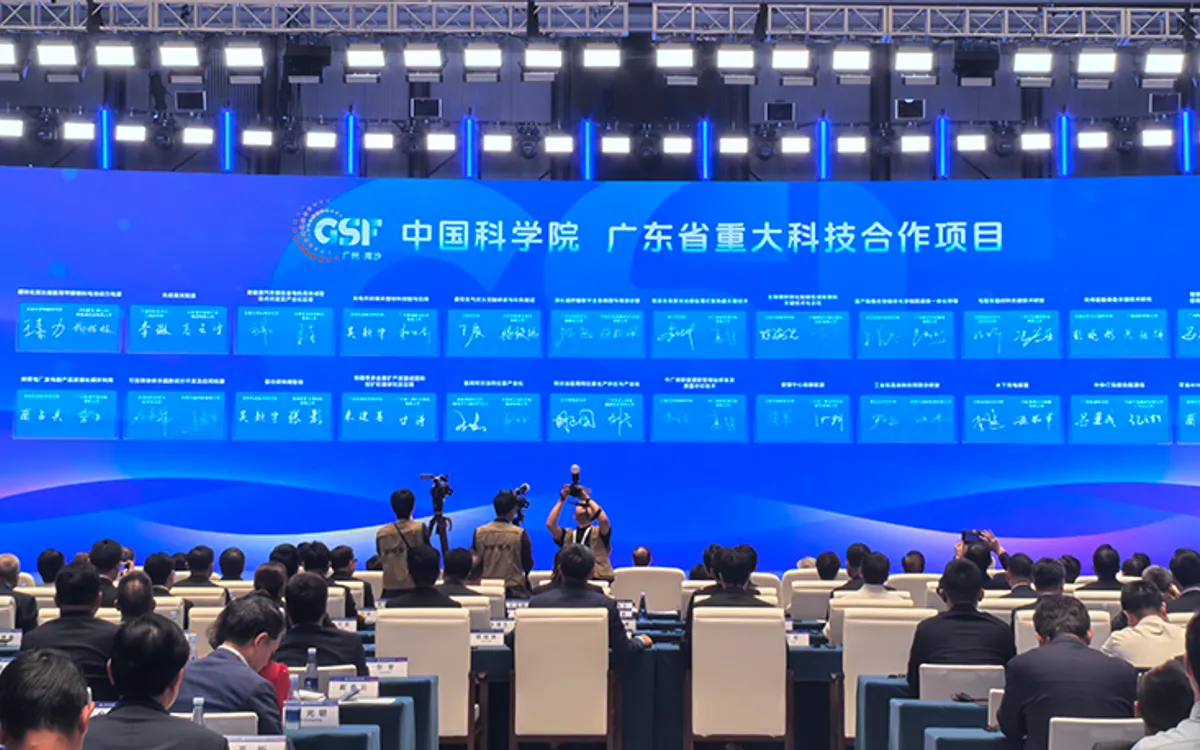
Guangzhou Automobile Group said it signed a strategic cooperation agreement with the Dongguan Institute of Materials Science and Technology, part of the Chinese Academy of Sciences on November 1, 2026, to jointly research key technologies for amorphous materials in automotive electric-drive systems. The signing took place at the opening of the 2026 Greater Bay Area Science Forum in Guangzhou, where the academy and Guangdong province also signed major science projects. GAC chairman Feng Xingya signed for the company.
In September, the institute said it and GAC had already developed a manufacturing process for amorphous-alloy motor cores. The material’s disordered atomic structure can reduce eddy-current and magnetic hysteresis losses, according to the institute. Thin and brittle strips posed a manufacturing problem. The team developed laser cutting, precision stacking and its own heat treatment process instead of applying the standard method for silicon steel.
GAC said its Quark Drive 2.0 amorphous electric drive is the world's first mass-produced amorphous drive, claiming peak motor efficiency of 99.03 percent and roughly one extra kilometre of vehicle range per kilowatt-hour of battery capacity. The figures are manufacturer claims. The company also said the unit received the 2025 global new-energy-vehicle powertrain innovation technology award, and was selected for a first prize in the 2026 China Society of Automotive Engineers science and technology progress awards.
GAC named three cars that it says already use the drive: the 2027 Aion RT, the Aion N60 and the 2027 Aion i60. At the September event the institute displayed the thin alloy strips, complete motor cores and a full drive assembly alongside vehicles. It said the joint work raised the number of layers in the core to 3,800, about ten times the figure it gave for a conventional silicon-steel motor.
The material already has applications in consumer electronics and power transformers. Vehicle-scale production meant adapting the way the core is formed and assembled. The institute had signed a related agreement with GAC’s powertrain business on August 25 to research next-generation automotive applications. The November agreement puts cooperation with GAC at group level and names electric drive as the target.
GAC did not disclose the agreement’s value or the properties being targeted in the next round of work. The 99.03% figure concerns peak motor efficiency under GAC’s measurement conditions. Range in an individual vehicle also depends on the battery, the rest of the drivetrain and how the car is driven. The November agreement marks a further research commitment building on work that both organisations have already described in production vehicles.
Sources
- Guangzhou Automobile Group Co., Ltd.
- Dongguan Institute of Materials Science and Technology, September industrialisation forum