
Chinalco and CATL extend cooperation on battery metals and recycling
The agreement adds a framework for nonferrous materials research, secondary metals and greener power. The companies previously worked on aluminum and copper alloys for batteries.
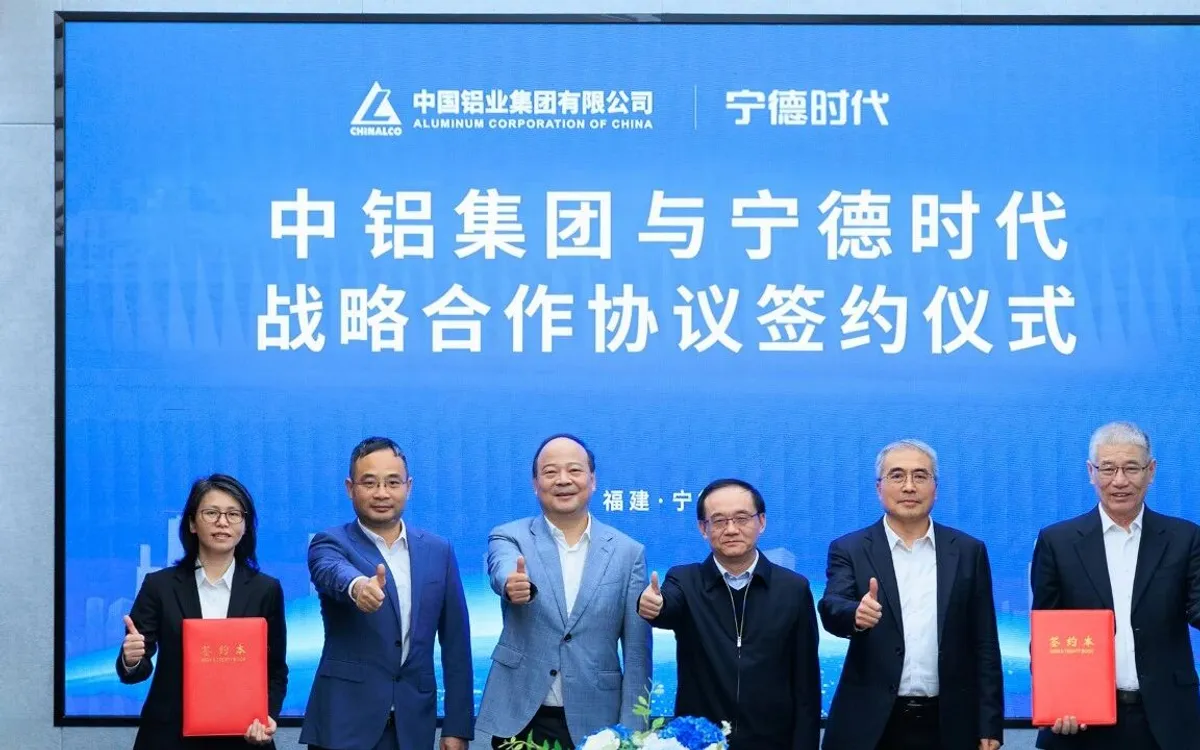
Chinalco and CATL signed a strategic cooperation agreement in Ningde to develop new nonferrous materials, recycle metals and work on greener power for industrial operations. CATL announced the agreement on November 8. Chinalco said the signing took place a day earlier in the Fujian city. The companies identified work across materials, energy and supply chains, without specifying a purchase volume or production target.
The new agreement builds on a relationship that Chinalco says dates to a first strategic cooperation pact in 2021. Since then the companies have worked on supplies of aluminum and copper alloy materials for batteries, greener energy at production sites and pilot projects in mine logistics. That track record puts the research agreement in the context of an existing supplier relationship. Chinalco also identified joint work on new nonferrous materials for the energy sector before the latest signing.
Both companies named the recycling of secondary metals as an area for cooperation. CATL’s 2026 interim report distinguishes battery metals that go into materials it produces from copper and aluminum that it also recycles through third parties. That makes the potential involvement of a supplier already working on battery alloys relevant to a wider loop for recovering metals. The agreement did not identify what material either company would take back, how recovered metal would be processed, or whether the companies would build dedicated capacity.
The power work includes looking at direct connections to green electricity supplies and energy storage. CATL also named high-altitude projects integrating generation, power networks, demand and storage. Chinalco’s account connects the new partnership with earlier work on energy at production bases and on equipment and logistics at mines. Those applications could have different electricity requirements, so the agreement leaves the location and scope of any eventual energy project open.
CATL included coordination across global supply chains in the announced scope. For automakers and battery buyers, the practical questions are which alloys or recycled grades would qualify for use, how material origin would be documented, and where production would be based. The November signing brought those areas into one agreement. The public disclosures gave no individual product specifications, recycling volume or location that customers could use to change a material sourcing plan.
Sources
- Contemporary Amperex Technology Co., Limited
- Chinalco, signing date and prior cooperation
- CATL, 2026 interim report on battery materials and metal recycling