
CATL and Chenzhou sign cooperation pact on battery swapping and transport electrification
The Hunan city and battery supplier also included green power and resource development. The November announcement gave no station locations or deployment schedule.
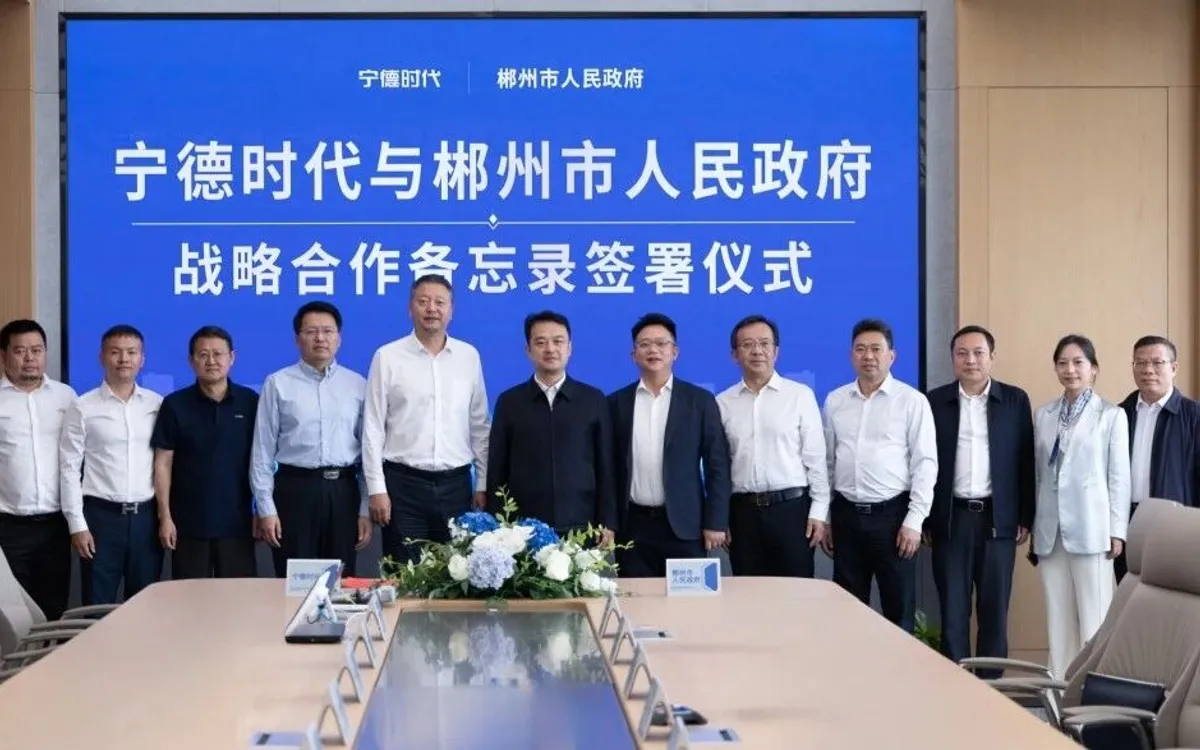
China’s CATL and the municipal government of Chenzhou signed a memorandum covering battery-swapping infrastructure, green power and transport electrification in the Hunan city. CATL announced the agreement on November 9. The partners also listed greener resource development and projects aimed at lowering emissions among the areas in which they intend to work. The announcement set out areas for cooperation and gave no initial station locations, vehicle procurements or construction schedule.
The city has already been identified in provincial policy as a location for developing a lithium and battery supply chain. In 2024 Hunan’s government backed projects in Chenzhou to develop lithium-bearing resources, make materials and batteries, and recover value from tailings and other mineral residues. The same document encouraged eligible local battery businesses to buy green power and associated certificates through the market. Those policies predate the memorandum and help explain why resource development and energy supply sit alongside transport in the new framework.
CATL has separate commercial and passenger-vehicle swapping programmes. In its 2026 interim report, the company said its Choco-Swap passenger network had reached approximately 2,000 stations in 180 Chinese cities as of the report date. The report describes QIJI Energy Swap as its commercial vehicle programme and identifies routes in provinces such as Shandong and Shanxi. Those examples give a baseline for what an operating swap network looks like. The announcement in Chenzhou did not identify which programme the city’s proposed infrastructure would use or which vehicle classes it would serve.
CATL’s interim report also describes its resources group, formed to manage mineral investments and operations across areas including lithium, nickel and phosphorus. The head of the resources group attended the Chenzhou signing, alongside personnel from the company’s green-energy business and local officials. The announcement did not identify a specific mine, mineral offtake contract or power project under the memorandum.
For fleets, the next details with operational consequences would be where swap sites go, which vehicles are compatible and when service starts. Those questions also affect whether operators can plan routes around the sites or purchase vehicles intended to use them. The memorandum makes electrification and energy infrastructure part of the same municipal discussion. A site or fleet agreement would give operators a deployment commitment they can plan around.
Sources
- Contemporary Amperex Technology Co., Limited
- Hunan provincial government, Chenzhou lithium and new-energy industrial policy
- CATL, 2026 interim report