
CATL and Shaanxi plan heavy-truck battery swapping along expressways
CATL said it signed a strategic agreement with Shaanxi Transportation Holding Group to build heavy-truck battery-swapping stations using the provincial expressway network and CATL's Qiji standardized swapping technology, disclosed on October 21, 2026.
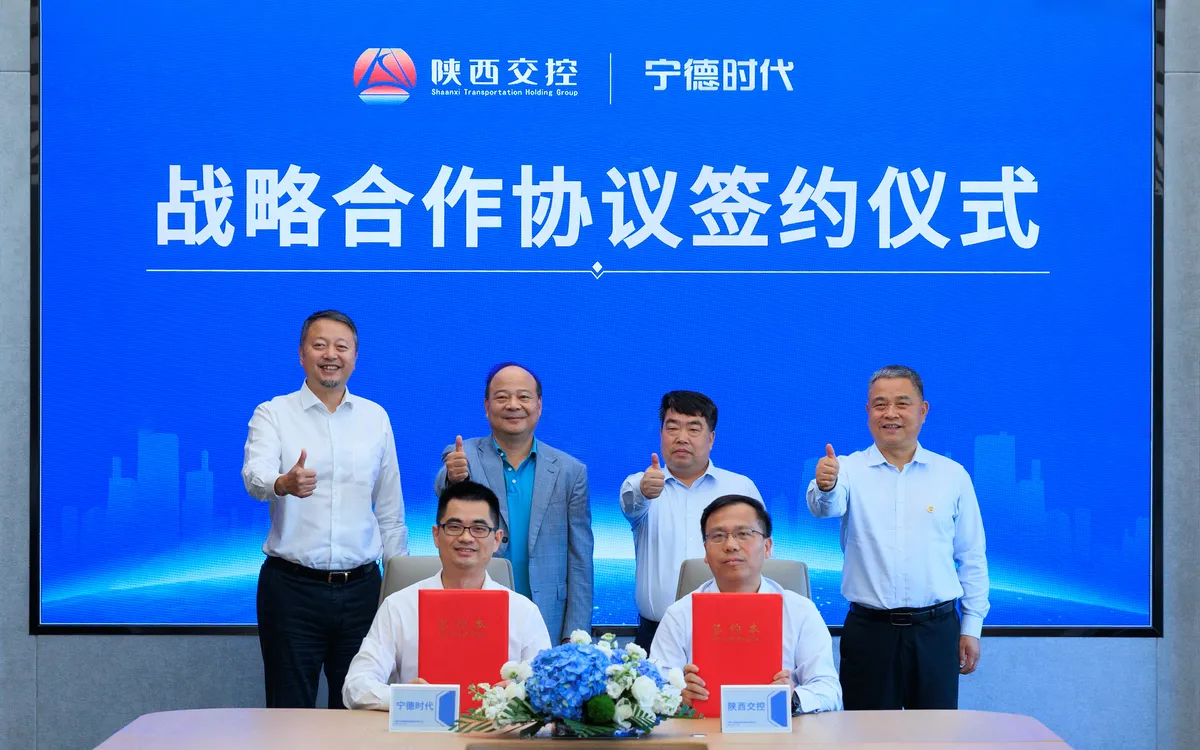
Contemporary Amperex Technology said it signed a strategic cooperation agreement with Shaanxi Transportation Holding Group to build heavy-truck battery-swapping stations along the provincial expressway network, using CATL's Qiji standardized swapping technology and network operating capability. CATL disclosed the agreement on October 21, 2026, describing the signing only as having taken place recently. Shaanxi Transport chairman Kong Qingxue and CATL chairman and chief executive Robin Zeng attended.
The mechanism is battery separation: the vehicle and battery can be handled separately, with depleted packs exchanged at stations. CATL said the model is meant to raise heavy-truck refuelling speed and cut total logistics costs, supporting wider adoption of electric heavy trucks. Highway rights of way matter here because long-haul trucks need swapping points spaced along intercity routes, not only at depots, and CATL identifies the Shaanxi group’s highway network and roadside resources as the basis for the plan.
The two sides also plan to co-develop solar generation, energy storage and charging and swapping facilities along expressways, to consume clean power locally and lower the road transport sector's emissions. They further intend to explore full-lifecycle battery services, battery dismantling and recycling, and low-altitude economy applications. All of these are stated plans under a signed strategic framework, not commissioned assets, and CATL gave no station count, investment figure or timetable.
In a separate November 14 release CATL said its swapping network had reached 2,520 stations across 200 Chinese cities at the end of September, integrating swapping, fast charging, vehicle-to-grid and station-to-grid functions. That national total has no breakdown by vehicle class, so it does not indicate how many heavy-truck sites exist or how many Shaanxi intends to add. CATL did not provide an overlap between the network counted in that release and the Shaanxi project.
CATL described roadside solar, storage and charging as complementary to the network. The precise combination matters for a site operator. A busy swap station needs charged packs in reserve, and the grid connection and available storage affect how those packs are recharged. The announcement leaves the choice of locations and the size of individual installations open.
CATL did not identify the truck makers or fleet operators expected to use the Shaanxi stations, the battery capacity or chemistry for heavy-truck packs, or how revenue would be split between the infrastructure owner and the battery supplier. The signing date was not given beyond "recently," and the agreement's duration was not stated.