
LG Energy Solution outlines a sub-ten-minute test for used EV batteries
LG says its Re.Pulse software uses short current pulses to estimate individual cell condition through existing test equipment, with applications in fleet maintenance and second-life screening.
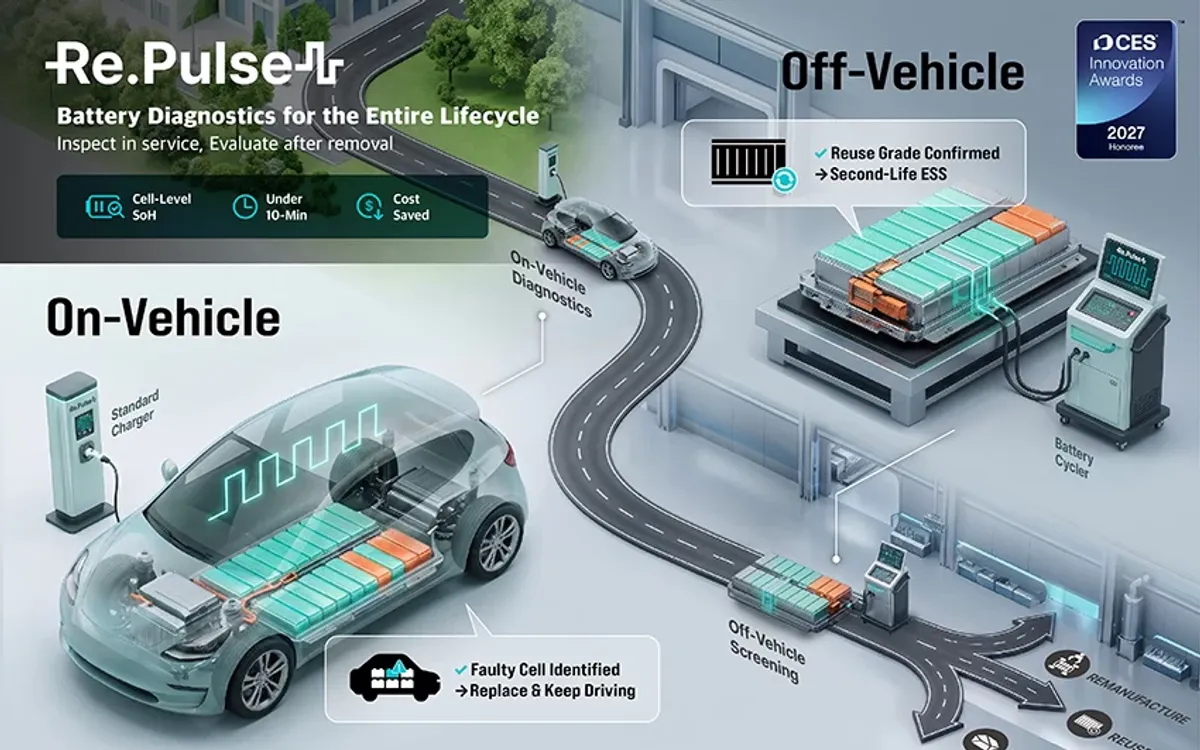
LG Energy Solution says its Re.Pulse software can estimate the condition of a used electric vehicle battery in under ten minutes, including readings at individual cell level. The Seoul-based battery manufacturer described the system on November 10, 2026, after it was named an honoree in a vehicle technology category of the CES Innovation Awards. The timing is LG's own claim. The award organiser says it did not test products or verify submissions.
Re.Pulse applies short current pulses and analyses the resulting voltage response to estimate state of health. LG contrasts it with a full discharge, recharge and second discharge, which it says takes more than seven hours in conventional testing. Shortening the procedure could allow more packs to move through the same inspection station, provided the shorter test delivers the accuracy needed for the decision at hand. LG's release does not specify the error margin, the batteries used for its comparison or whether performance differs by battery chemistry.
Cell-level assessment is a separate change from test speed. A fleet workshop or refurbisher can use information about where degradation is concentrated to decide whether a particular unit warrants further testing or replacement. LG says the software can examine a battery while it is still in service or after it is removed. Results are intended to help direct used batteries towards reuse, remanufacturing or recycling.
The company says it designed Re.Pulse to work with standard capacity testers and EV chargers without requiring dedicated hardware. It lists inspection centres, fleets, used-vehicle valuation and second-life stationary storage among possible uses, with results available through formats including web and mobile applications. The announcement does not identify compatible tester models, pilot customers, a licensing price or a date when operators can buy the system.
For an operator deciding how to inspect batteries coming out of service, the announced timing and the level at which the software reports degradation are the two measures to check. A quick screening step can help allocate workshop time, while a decision to return a battery to service or move it into stationary storage depends on the applicable safety and acceptance checks. LG described a way to generate battery health estimates and gave no evidence that the test replaces those checks.