
EVE and Jiushi plan batteries for mobile charging and cold-weather freight
The two Chinese suppliers will work on an unmanned mobile charger with 200 kWh of storage and a separate battery system for logistics vehicles in cold regions.
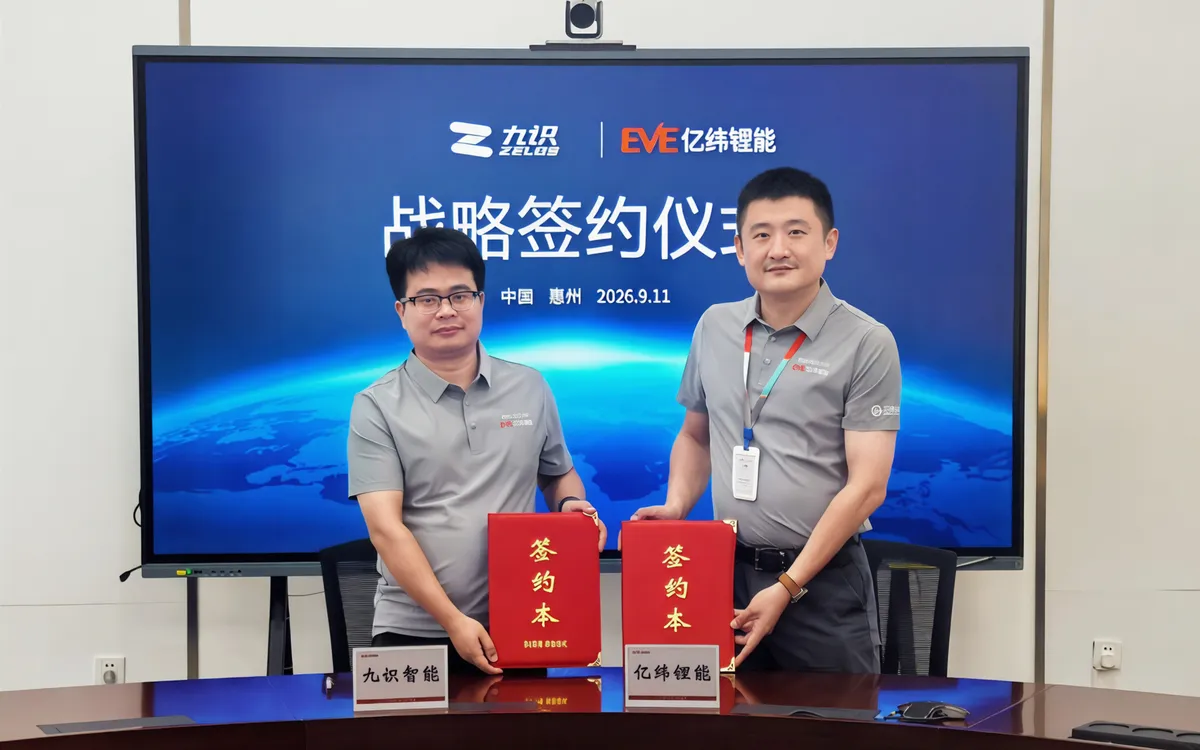
EVE Energy and Jiushi Intelligent Technology are working on two battery projects for autonomous logistics under an agreement signed in Huizhou. EVE disclosed the cooperation on September 20. A subsequent member announcement from the China Road Traffic Safety Association identified the projects as an unmanned mobile charging vehicle with 200 kWh of storage and a battery system for driverless delivery vehicles in cold regions.
The mobile vehicle would combine a power source with a platform that can move without a driver. The 200 kWh figure describes how much energy it is intended to carry. The association says the partners plan to fit the equipment to the vehicle and check how it performs under operating conditions. It gave no charging-power rating or number of other vehicles the mobile unit could serve. Those figures would depend on the resulting equipment, how fast customers need to recharge and where the charging unit can replenish its own battery.
The separate cold-region project calls for the companies to develop a lithium manganese iron phosphate battery system for delivery vehicles. Its scope is narrower than EVE’s general description of the agreement, which also mentions mobile energy, digital driving systems and new-energy commercial vehicles. The member announcement gives a chemistry for the cold-weather system. It gives no operating temperature, range, or recharge-time result, so each of those remains something for the partners to measure during development.
Jiushi already has projects in parcel and urban delivery. Guangzhou’s Baiyun district said in September that a company associated with the Jiushi project had registered there in July. It put the investment into a logistics market that includes retail and cold-chain transport, two uses with different vehicle duties. In a separate September report, the Taizhou postal authority said Jiushi presented progress on a local delivery pilot, a vehicle manufacturing base and an East China operations centre. Neither local report identified the EVE battery system as part of those deployments.
The two battery projects therefore sit alongside delivery work that is already under way. For a parcel operator using fixed routes, a moving charger would have to fit depot and turnaround schedules. For a cold-region operator, time lost to recharging is a different operating question from the battery’s usable energy during a shift. The September disclosures set out which equipment the partners intend to test, but specify no trial route, production order or delivery date.
Sources
- EVE Energy, cooperation announcement
- China Road Traffic Safety Association, member announcement
- Guangzhou Baiyun district, Jiushi investment
- Jiangsu Postal Administration, Taizhou pilot