
Yuncangpei plans at least 2,000 new-energy commercial vehicles in EVE deal
EVE Energy said it signed a strategic agreement with Yuncangpei under which the logistics firm would prioritize EVE traction batteries while deploying no fewer than 2,000 new-energy commercial vehicles over two years.
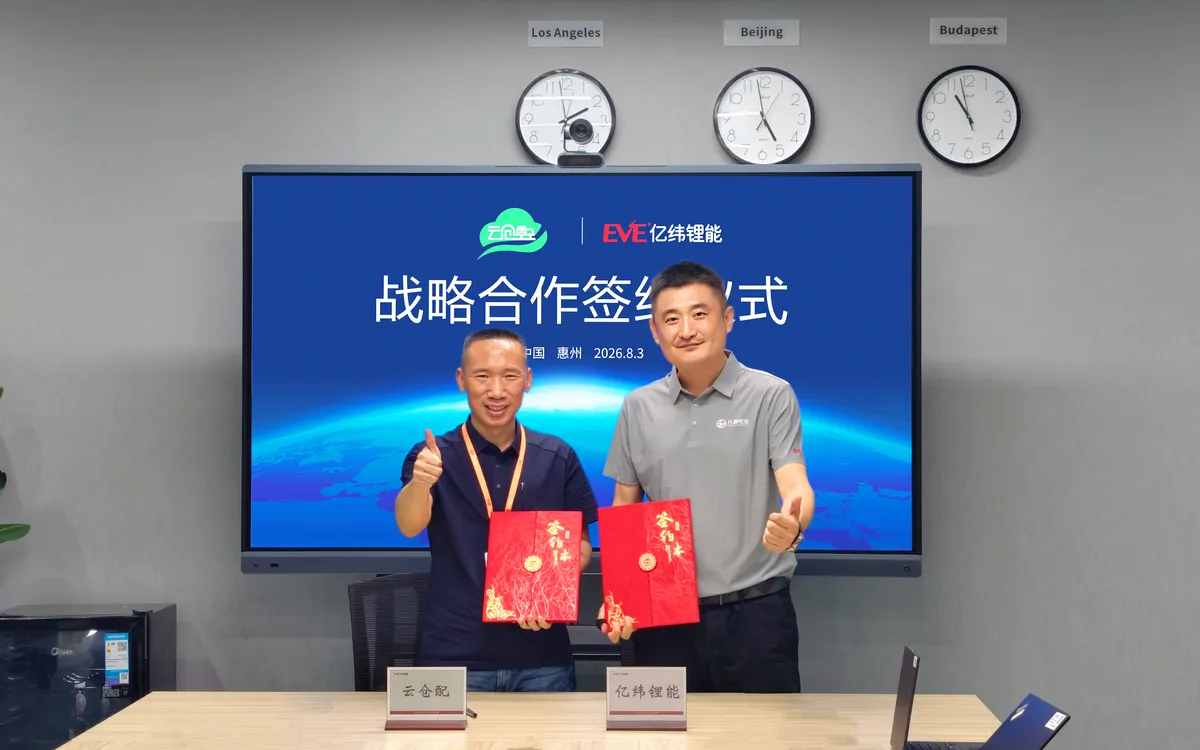
EVE Energy said it signed a strategic cooperation agreement with Yuncangpei Supply Chain Management (Xiamen) at EVE's Huizhou headquarters, disclosed on September 3, 2026. Under the two-year plan, Yuncangpei would prioritize EVE traction batteries while deploying at least 2,000 new-energy commercial vehicles. The companies would also explore battery applications in unmanned and cold-region logistics, according to the release.
On the other side, EVE said it would give priority to Yuncangpei's warehousing services and open a logistics tender channel to it. The two-way arrangement means the plan covers both vehicle-battery supply and storage-and-transport services, not battery volume alone. The document named no battery model, vehicle model, pricing or delivery schedule. The vehicle figure is a stated deployment commitment, not a completed count.
EVE described Yuncangpei as a 20-year-old AAAA-rated logistics enterprise operating 100 self-built physical logistics outlets, 530,000 square metres of self-operated warehousing and access to capacity from more than 60,000 vehicles covering more than 95% of county-level cities in China. That scale is the counterparty description in EVE's release, and supplies the context for the plan's potential reach.
The release said Yuncangpei became one of the first value-creation partners for EVE's open-source battery AI BATTERY programme on May 9, 2026. The September agreement therefore extends an existing tie rather than starting one. EVE offered no battery shipment figures or revenue value for the earlier partnership, so comparison across the two dates is limited to the existence of the May tie and the later two-year plan.
The technology-verification part calls for joint work on EVE traction batteries in unmanned logistics and cold-region logistics, to adapt lithium battery technology to autonomous-driving systems and move toward commercialisation. That element remains exploratory in the document. The release does not state which cold-region routes or autonomous-vehicle platforms would be used, nor which entity would carry the testing cost.
The size of Yuncangpei’s wider logistics network gives it several ways to deploy the vehicles, but the agreement does not identify a route, depot or initial batch. A fleet order could establish which vehicles will use EVE batteries and on which routes. Tests in cold-weather or driverless services would answer a different question about how those batteries work in operation. The release gave no order value or financing terms.