
England cross-pavement EV guidance: local authority still decides, permit rules apply
DfT guidance for England makes local highway and planning authorities the decision-makers on cross-pavement EV charging, with new permitted development rights from 21 October 2026 that carry conditions.
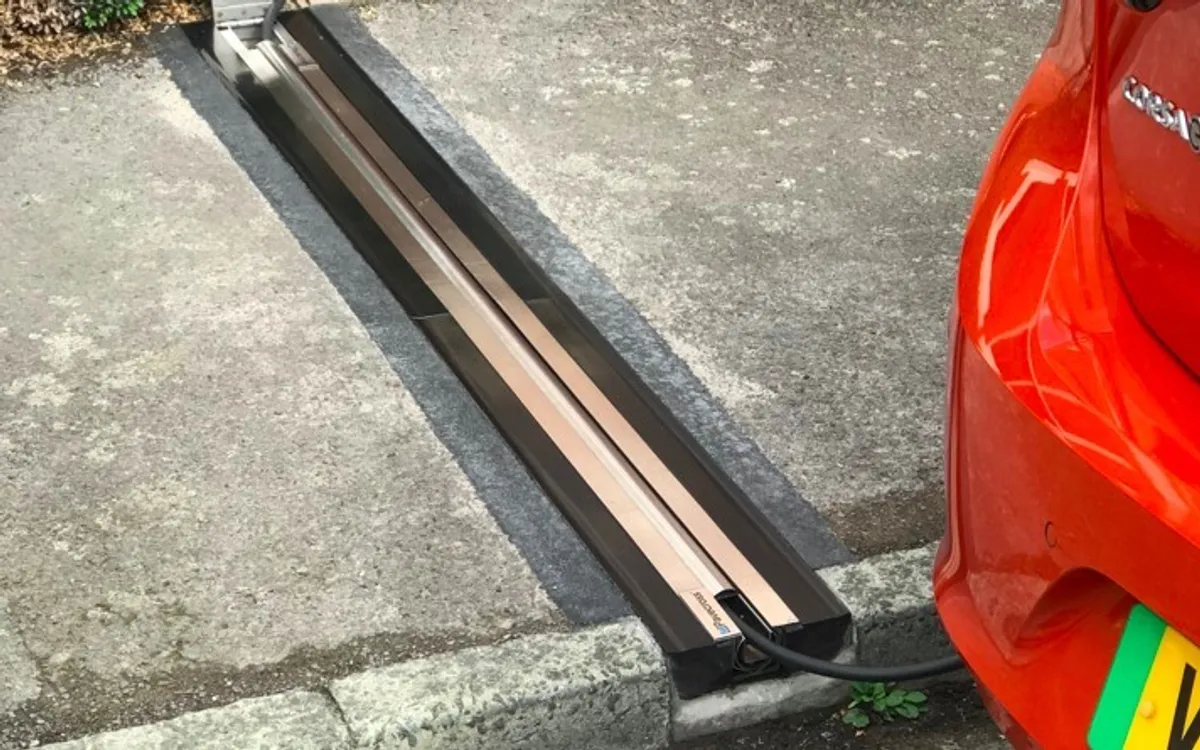
The UK Department for Transport has republished guidance for England on cross-pavement electric vehicle charging, updated to reflect changes to permitted development rights and to domestic EV charge points. The decision to allow a cross-pavement solution on a public highway rests with the relevant local authority, the department states. From 21 October 2026, a new permitted development right allows installation subject to limitations and conditions, but the guidance does not confer automatic installation rights.
In England, where two tiers of local government exist, the local highway authority generally sits in the upper tier and the local planning authority in the lower tier. Permissions may therefore sit across different bodies or departments. Where the road has not been adopted by the highway authority, the resident must seek permission from the landowner instead. Relevant consents can include section 178 permission under the Highways Act 1980. For non-statutory undertakers placing apparatus in the street, a section 50 licence under the New Roads and Street Works Act 1991 is required from the highway authority, covering maintenance liability, reinstatement and removal.
Cable channels, sometimes called gullies, are proprietary systems that temporarily house the charging cable during a session; the cable is removed once charging ends. The guidance calls these the most common solution used in trials. A second model buries a permanent cable below the pavement, connecting the domestic supply to an above-ground interface such as a removable bollard or charging lance. Charging bridges are among emerging technologies the document does not cover. Local authorities should be satisfied that any solution meets construction, safety and accessibility standards before agreeing to installation.
The charge-point permitted development right is conditional. Where a charge point is installed on a property immediately adjoining the highway, development is not permitted if there would be less than 1.5 metres of footway between the charge point and the road. Existing rights were also amended to allow domestic charge points on or within the curtilage of a house or block of flats, including where there is no off-street parking. If a charge point sits where off-street parking cannot legally be used, it can only proceed under permitted development when used with a cross-pavement solution.
Installation does not give the resident ownership of or priority over the parking space outside their home, and the guidance says this should be made clear. Local authorities should weigh pavement construction and width, the safety of the intended parking area, and the presence of double yellow lines, crossings or junctions. Surface utility covers and tree roots may need to be avoided. Traffic regulation orders are not normally needed, but are required if a local authority designates on-street parking bays.
No specific British standard exists for cross-pavement charging solutions. The guidance points to BS EN 124-2015 for gully tops and manhole tops and BS EN 1433-2002 for drainage channels as comparable references for strength and skid resistance. For permanently buried cables, standards similar to public charge points may apply, including BS EN IEC 61851-1:2019 and BS EN IEC 61439-7. The Specification for the Reinstatement of Openings in Highways sets reinstatement standards, including a two-year guarantee for undertakers, and DfT has published an addendum covering EV cable channels.
The government has provided the EV Pavement Channels Grant to support English local authorities. Households with local authority permission can claim 75% up to £500 of the charge-point installation cost. Nottinghamshire County Council received LEVI Pilot funding in January 2023 to trial up to 300 cable channels; as of July 2026, 161 were installed. Householders fund their own charge point. The guidance also says local authorities may consider requiring public liability insurance, as Milton Keynes City Council does under its cable-channel service agreement.