
Renault gives electric Kangoo models a larger battery and faster DC charging
Renault has raised the Kangoo’s battery capacity from 45 to 52 kWh. It also cuts the stated time to charge from 15% to 80% by ten minutes.
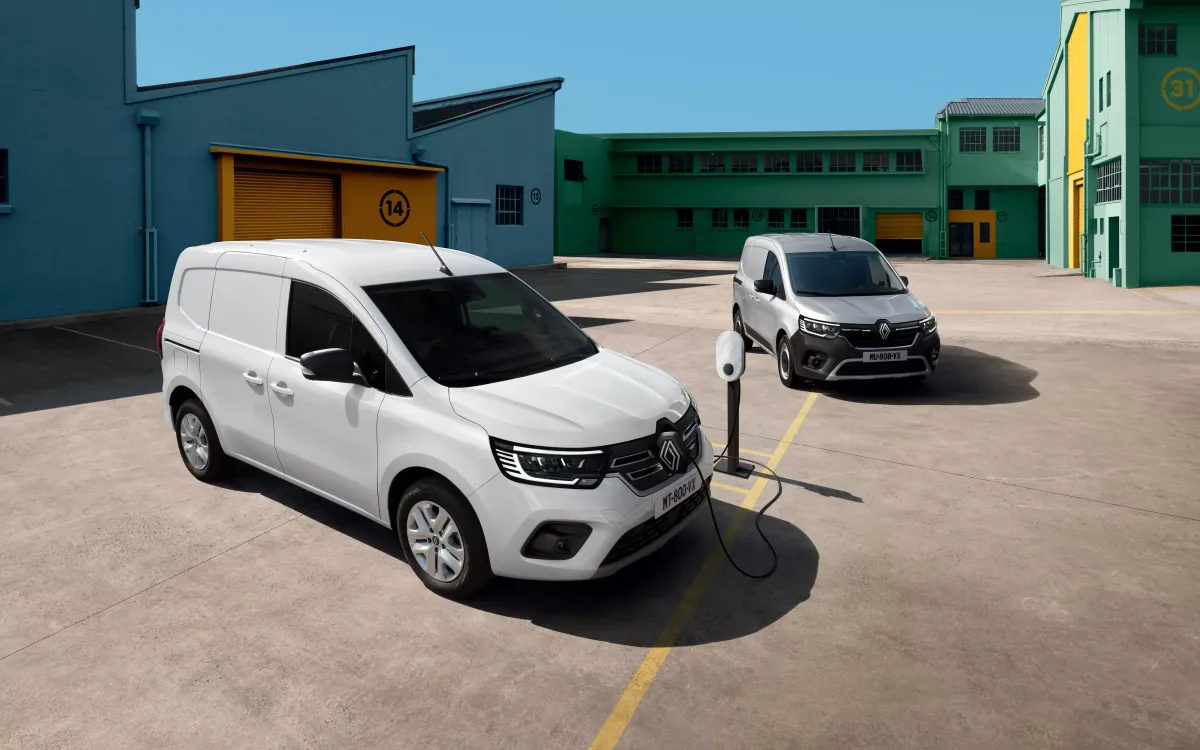
Renault said on 9 October that it is replacing the 45 kWh battery in its electric Kangoo van and passenger models with a 52 kWh pack. The new lithium-ion battery uses nickel, manganese and cobalt, and is also fitted to the electric Renault 5 and Renault 4. Renault expects up to 354 kilometres on the WLTP cycle, depending on model and body style, subject to final approval of those figures.
The upgrade changes the time a van needs at a charger as well as the energy it can carry. Maximum DC charging power rises from 80 to 100 kW. Renault puts the time to go from 15% to 80% at 30 minutes, down from 40 minutes. It says half an hour at a DC charger can add up to 240 kilometres of range, compared with 179 kilometres previously. The battery state-of-charge window and the distance attributed to a half-hour stop are two different measures. Fleet operators can use the first to compare time at the plug and the second to assess how much of a route the stop might cover.
AC charging remains relevant for vans parked at work or leaving a depot after a scheduled break. Renault offers 11 and 22 kW AC options, depending on the model. It quotes three hours and thirty minutes for the same charge window at 11 kW and one hour and forty-five minutes at 22 kW. A buyer comparing these times needs to check the van’s fitted charger as well as the supply available where it parks.
Renault has also replaced the previous 90 kW motor with two newer units, rated at 100 and 115 kW. Maximum torque is 270 and 300 Nm, respectively, against 245 Nm for the outgoing unit. The new battery is made in Douai and the motor comes from Cléon in Normandy. Renault assembles the vehicles in Maubeuge and says the running gear modules come from Le Mans.
Kangoo Van remains available in panel van, crew cab and platform cab layouts and two wheelbase lengths across the range. Renault also continues to list petrol and diesel versions. The battery and DC improvements apply to the electric models, and the published maximum range depends on the body chosen. For commercial buyers matching a vehicle to a route or conversion, the relevant comparison is the ordered electric configuration and its charging provision.