
German depot trial exports up to 350 kW from a MAN electric truck
The SPIRIT-E researchers demonstrated electricity transfers from an eTGX to a Regensburg freight depot and the public grid. The project modelled potential savings on energy costs.
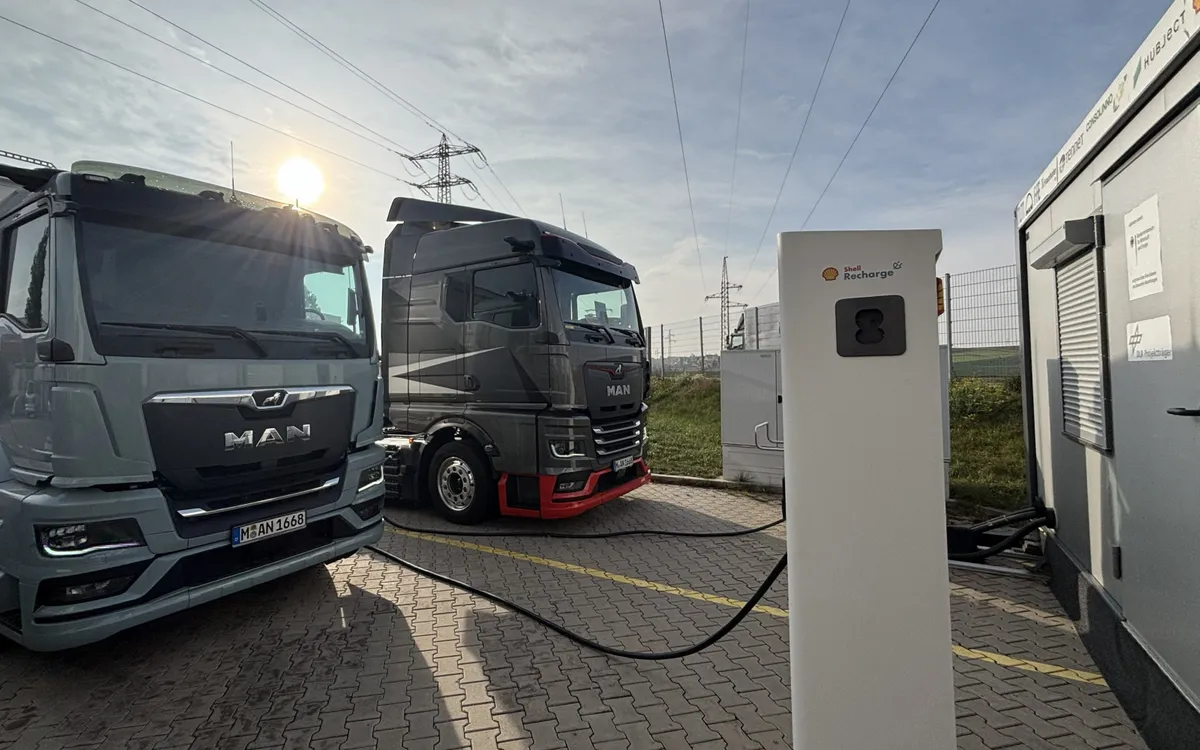
An electric MAN eTGX fed power back to a freight depot and the public grid at up to 350 kW in a German demonstration whose results were presented on 30 October. The SPIRIT-E project tested the truck at Schmid’s logistics site in Regensburg. Its technical lead, the Technical University of Munich, reported that the vehicle had 480 kWh of usable battery capacity. A bidirectional DC charger allowed the truck to discharge power while parked.
The three-year project demonstrated several ways of using that power. The truck supplied electricity to the depot’s local network and to the public grid. The group also demonstrated using its battery to charge another vehicle. The hardware tests covered both the eTGX and stationary and mobile systems supplied by charging equipment partner SBRS. The project used the ISO 15118-20 vehicle-to-charger communication standard and coordinated software that controls the site, the charging equipment and the links to the grid and energy markets.
A separate exercise tested the commercial processes. The consortium simulated buying electricity at lower prices and selling at higher ones. That work showed how market participation could be arranged in a trial environment. It did not establish a revenue stream at the Regensburg depot. The consortium also built software to schedule charging at a depot and a system to reserve charging stations, elements intended to help an operator plan when it can park a truck and when it must be ready to leave.
The project’s calculations indicate a potential average reduction in energy costs of about 10%. MAN said the outcome depends on factors including annual mileage, time at the depot, electricity and grid charges, and the available grid connection. MAN identified recurring depot stops and annual mileage below 100,000 kilometres as a particularly promising use case. The university likewise singled out regional vehicles that return to a base regularly.
For hauliers considering the equipment, the trial separates the discharge capability from the financial case. A parked truck can serve short site loads or release energy to the grid. The usable window still depends on departures, grid capacity and the electricity the vehicle needs for its next trip. MAN says it is working to bring the capability into series production. It did not give a commercial launch date or price.