
Hyundai starts a driving-data programme ahead of 2028 assistance launches
The programme feeds road data into model updates. Hyundai plans Nvidia-based driver assistance first and a separate Korean Level 4 pilot.
Hyundai Motor Group said on September 13 that it had put a driving-data and validation programme into operation ahead of planned driver-assistance launches in 2028 and 2029. The group wants road recordings and simulator tests to feed successive software updates. It is developing one set of products with Nvidia and another around Atria AI, the system it is building with software subsidiary 42dot.
Hyundai says the first Nvidia-based production vehicles, which it describes as Level 2+, are targeted for the first half of 2028. It aims to follow in the second half with a configuration it calls Level 2++. A production model using its own Atria AI at the latter level is targeted for the second half of 2029. Those labels are Hyundai's description of assisted driving products. In the standard Level 2 category a driver remains attentive and responsible while the system assists with steering and speed.
The group said it operates about 40 dedicated data-collection vehicles. It records situations such as roadworks, adverse weather and tight streets, then selects difficult examples for model training. Engineers use recordings to recreate some situations virtually so they can repeat tests without relying on the same circumstances recurring on a road. Hyundai plans to standardise sensors progressively across Hyundai Motor, Kia, 42dot and Motional around Nvidia's Drive Hyperion 10 architecture to make data easier to use across programmes.
A separate Level 4 validation pilot is planned in Gwangju by the end of 2026 in partnership with South Korea's transport ministry. Hyundai says it will use an Atria AI-equipped research vehicle and feed observations into further development. In the Level 4 category an automated system can take over the driving task within a defined operating area. The pilot has its own purpose and timetable alongside the supervised consumer systems.
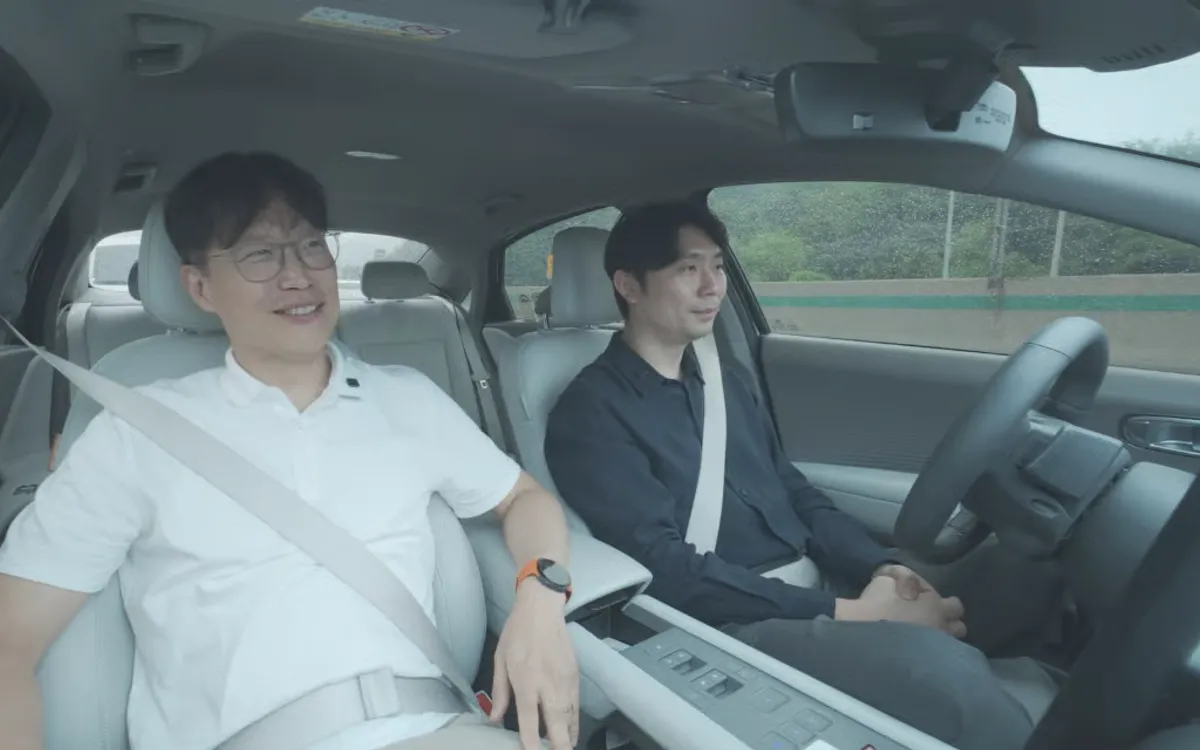
Hyundai showed footage of its test vehicle in Seoul and said it drove through the segment without an intervention. The company did not provide a comparable fleet-wide intervention rate, routes for the proposed Gwangju service or production vehicle names. For automakers and suppliers, the timetable identifies when common sensors and computing platforms may have to be ready. The results that will determine wider use are repeated validation across different conditions and confirmation of which production cars and markets receive each system.