
Hyundai Mobis starts development of 13 automotive chips with Korean suppliers
Nine chips already have target vehicle models. The project adds software, packaging, validation and functional safety firms to a wider Korean sourcing effort.
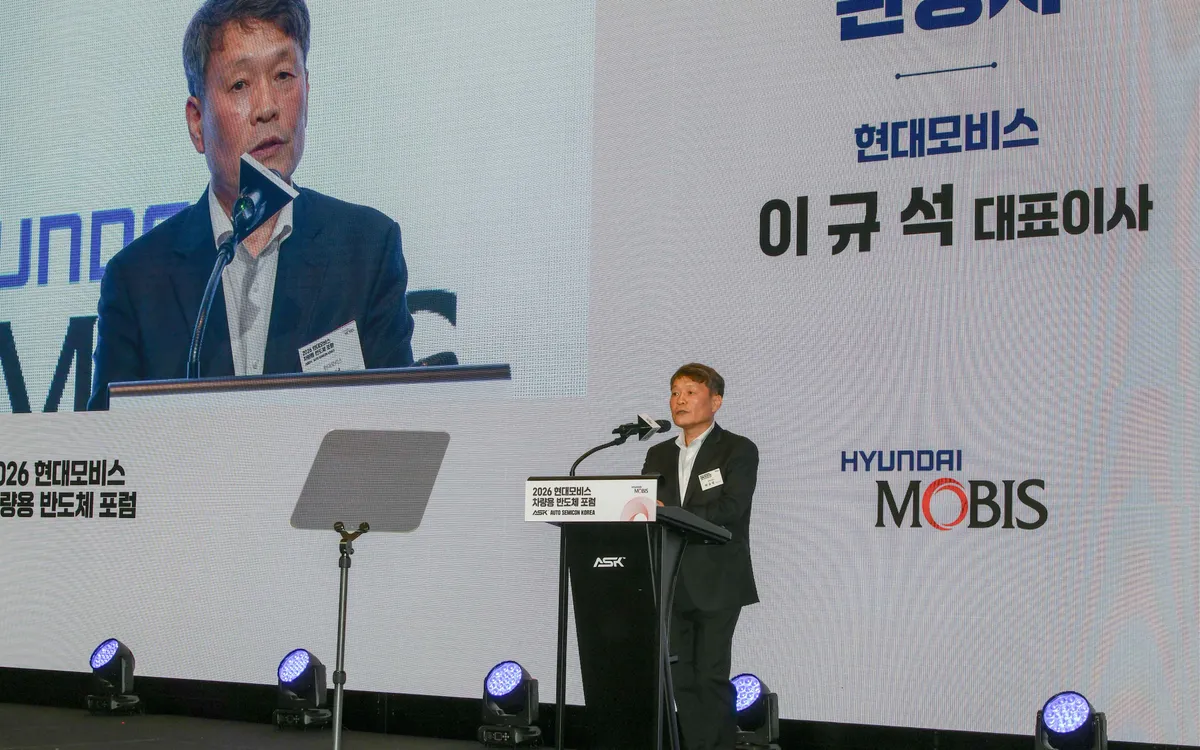
Hyundai Mobis said on October 21 that it had begun developing 13 automotive chips with Korean partners, with target vehicle models already selected for nine of them. The company identified 19 potential system semiconductor projects in the first year of its industry collaboration. It disclosed the progress at the second Auto Semicon Korea forum in Seongnam, which drew 53 companies and institutions compared with 27 at the first event.
The wider group adds participants in chip intellectual property, software, packaging, testing and functional safety to the automakers, chip designers and foundries involved in the original effort. Hyundai Mobis says it plans to share vehicle and controller requirements earlier in development so partners can design for a specific function, quality threshold and target vehicle. In practice, that gives a chip company an indication of which system it needs to qualify and when the automaker expects to test it.
System semiconductors under discussion include microcontrollers, communications chips and power-management chips. The forum also explored collaboration on silicon carbide and insulated-gate bipolar transistor power semiconductors. Those devices belong to a separate area of work on power electronics. Hyundai Mobis has experience as a chip customer and designer. The company says it already produces 16 types of its own system chips through external foundries at a combined annual scale of 20 million units.
The trade and industry ministry, Hyundai Motor, Hyundai Mobis and LG Electronics launched a task force at the event. Mobis also cited a planned vehicle semiconductor support centre in Cheonan, which is targeted for completion in 2027 with government and local backing. The centre would support semiconductor reliability tests and evaluations. That infrastructure is relevant to suppliers trying to qualify a part for vehicle use, where the chip has to work in the controller and in the vehicle itself.
Hyundai Mobis did not name the target models in its release. Speaking to reporters at the forum, President Lee Gyu-suk said vehicles could use the chips from 2029 at the earliest and that controllers containing them would enter early vehicle testing in 2027, Yonhap reported. The project count and model assignments identify development work under way. The supplier milestone now is getting those parts through controller and vehicle tests before any series production commitment.