
Hyundai and Kia plan wider use of in-house vehicle inspection systems
The carmakers outlined a common software framework for Korean and overseas plants, including a tunnel that checks vehicle exteriors and virtual models for troubleshooting equipment.
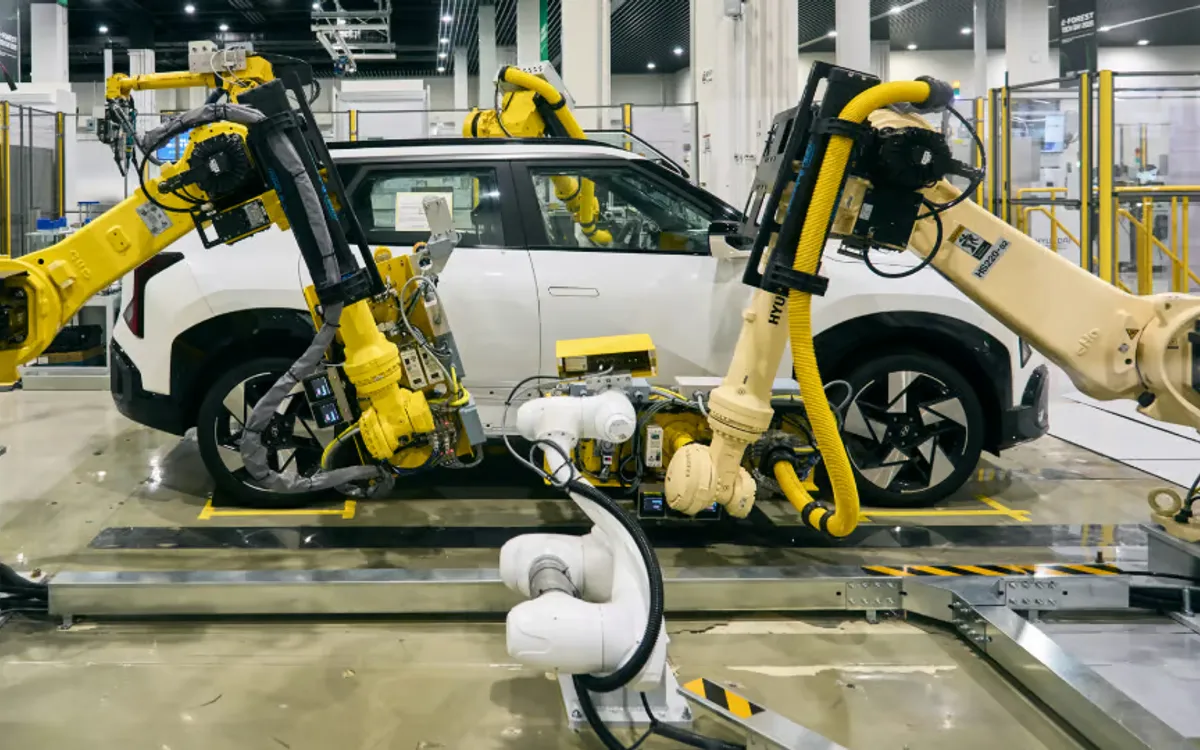
Hyundai Motor and Kia said on October 18, 2026, that they planned to apply an in-house vehicle exterior inspection system at plants in South Korea and overseas. They presented the plan ahead of E-FOREST Tech Day at their Uiwang research institute, where the companies scheduled demonstrations of about 200 manufacturing technologies from October 19 to 21. The initiative is one example of a broader move to make factory systems easier to deploy across plants.
The exterior inspection system uses a tunnel arrangement and three-dimensional simulation to check a finished vehicle's outside surfaces. Hyundai and Kia said they developed it in place of third-party systems. The companies cited a goal of improving finished-vehicle quality, without identifying the first production line, disclosing an inspection rate or publishing a comparison of detection performance with the systems it would replace.
To expand software deployment, the companies are building a common framework for collecting and managing production data and a shared environment in which to develop applications. The plan is to use standard technology for features that can be adapted to individual factories. That matters for factory engineering teams comparing equipment at several plants. A common software environment can support reuse, while work remains to connect a tool to each line's equipment and operating requirements.
Hyundai and Kia said their digital twin technology simulates the behaviour of actual factory equipment in a virtual environment. The companies also listed artificial intelligence tools for retrieving and interpreting factory data, searching manufacturing know-how and drafting equipment manuals. Those applications were slated for demonstration alongside automation for assembly and inspection. The event also covered energy systems and production methods such as additive manufacturing, in which parts take shape from digital designs without requiring a mould.
The move builds on Hyundai and Kia's 2024 E-FOREST event at the same Uiwang site, which also featured digital twins, factory AI and automated assembly. The 2026 announcement describes a standardised rollout plan and specific inspection equipment the manufacturers want to take to more sites. For equipment suppliers and system integrators, this points to more importance for interfaces and software compatibility when proposing projects. The release provides an engineering direction, while the timing and scale of plant-specific orders remain undisclosed.