
Ford ships Michigan-made LFP cells for Fathom pickup prototypes
Ford has begun sending prismatic battery cells from Marshall, Michigan, to Louisville for prototype builds. It plans to start assembling packs in Marshall in 2027, ahead of the electric pickup’s launch.
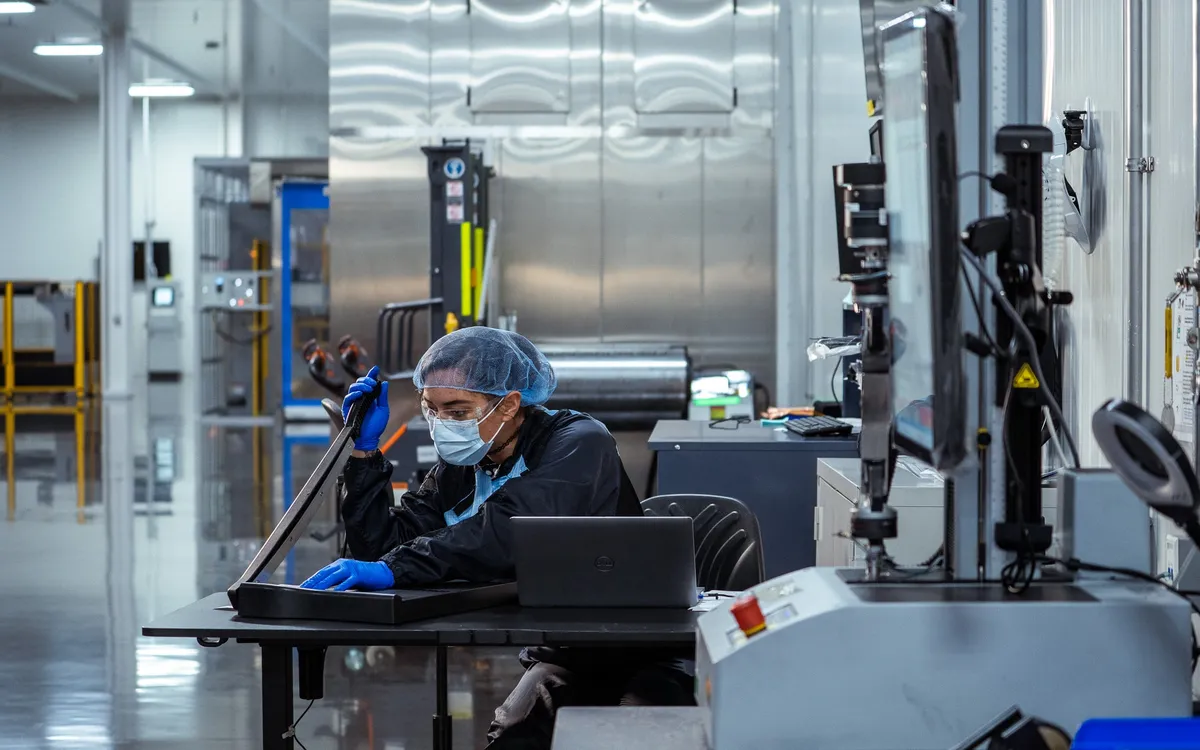
Ford said on November 18 that it had started shipping the first lithium iron phosphate battery cells from BlueOval Battery Park Michigan to its Louisville Assembly Plant. The cells are for prototypes of the Fathom midsize electric pickup. The transfer gives the vehicle programme parts from Ford’s own Michigan production line while the truck and its battery pack are still being developed.
The cells are prismatic, meaning each has a rectangular shape. Ford says that shape suits a pack designed to act as a structural part of the truck. The design puts the cells directly in the chassis and uses a flexible circuit board for electrical and sensing connections. Ford has also integrated power electronics into the pack. Those decisions change the work of the battery and vehicle manufacturing teams because the pack serves a structural role as well as storing energy.
Ford selected a lithium iron phosphate design from CATL after looking for technology it could manufacture at scale. The chemistry uses neither nickel nor cobalt, and Ford cites that as a way to control battery costs. Ford tied both chemistry and packaging to its effort to make a less expensive EV on its Universal Electric Vehicle Platform. In October, the company said the 2027 Fathom would start below $30,000. It did not give a battery capacity, a cell cost or the size of the prototype shipment in the November disclosure.
At Marshall, Ford says its lines can deliver 40 cells a minute. That is the stated pace of the assembly lines, and the company gave no annual production forecast in the shipment announcement. Ford also said staff use image recognition to check for defects during production. The prototype shipment establishes that cells are leaving the line and going into development work in Louisville. Pack production in Marshall is the next step, with Ford targeting a start there in 2027 before the vehicle launch.
The Michigan operation also has a role in Ford’s plans for stationary battery storage. Ford says the manufacturing methods and controls developed at Marshall are informing preparations for its storage business in Glendale, Kentucky. The customers and products are different. For the Fathom programme, the milestones to distinguish are cells produced in Marshall, prototype builds in Louisville and the later start of pack production. Ford disclosed the first of those shipments and gave a target year for the pack plant.