
Ford casts more than 5,000 structures for Fathom truck prototypes
The Kentucky castings are going through process trials and prototype assembly as Ford prepares two large aluminum parts that will replace 146 structural pieces in its midsize electric pickup.
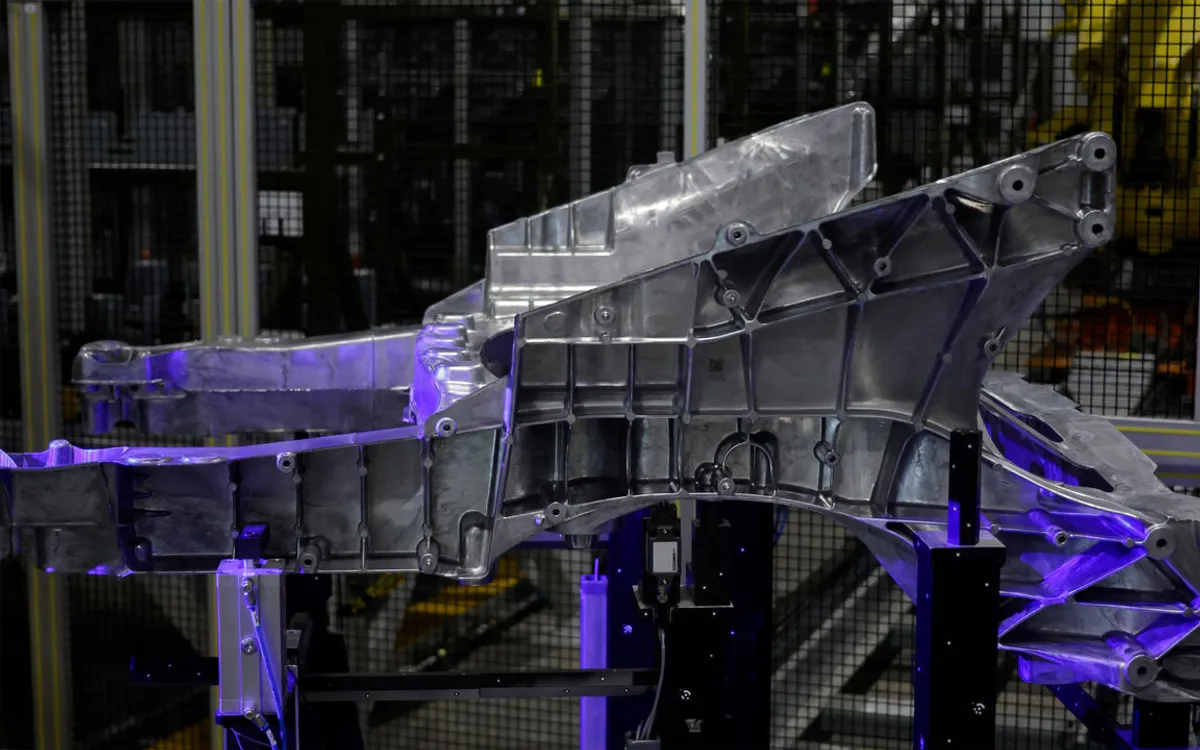
Ford said on October 28 that its Shelbyville Technical Center in Kentucky had produced more than 5,000 large aluminum castings for the Fathom electric pickup. The front and rear structures are going to Louisville Assembly Plant for prototype build and process testing. Ford is targeting a 2027 launch for the midsize truck, and the October figure counts castings made during development.
Ford says the two structures replace 146 separate parts in its manufacturing design. The vehicle will be assembled in three sections that can move through production in parallel before they are brought together. That sequence changes where manufacturing checks take place. A casting combines work that would otherwise be distributed across multiple pieces, which makes the size, alignment and internal condition of each large part relevant before it reaches the final assembly plant.
At Shelbyville the operation starts with aluminum ingots melted at about 700 degrees Celsius, or 1,300 degrees Fahrenheit. A casting machine injects the metal into a mould for a front or rear structure. A robot removes the formed part and moves it to a cooling tank. The part is then positioned for visual inspection. Ford described machining and further checks on parts from each batch, including dimensional measurement, optical scanning and X-rays to look for internal defects. The lab tests samples for strength and alloy composition, and the batch remains on hold until the required checks are complete.
The company said it is working to shorten casting cycle time. It also said the parts were designed for modular repair, a consideration for a production process that combines a large number of smaller structural pieces. The update gave no production cycle-time figure, and it included no repair manual or collision repair prices. Those measurements would answer different questions for a production engineer and a body shop.
A separate November update from Ford traced another input to the same Louisville prototypes. The company said cells were coming off the line at its battery plant in Marshall, Michigan, for the truck’s development builds. Shelbyville is testing a way to manufacture and inspect the truck’s structure, while Marshall is beginning to supply the cells. The two disclosures show which major components are reaching prototype assembly. They leave the rate at which the completed trucks can be built for customers to the next stage of the programme.