
China's new-energy vehicle output rises 17.1% as October vehicle production falls
Factories in the official industrial survey produced 2.027 million new-energy vehicles out of 3.045 million vehicles. Sedan output fell nearly a quarter from October 2025.
China's factories produced 2.027 million new-energy vehicles in October 2026, up 17.1% from a year earlier, as total vehicle output fell 7.7% to 3.045 million. The National Bureau of Statistics published both figures on November 16 in its monthly report on large industrial enterprises. New-energy vehicles accounted for about two-thirds of the vehicles counted, compared with about 61% in the preceding month's release.
The October increase extended a shift already visible in September. The bureau reported that September's new-energy output was 1.870 million, up 16.9% from a year earlier, within total output of 3.063 million vehicles. October's new-energy total was roughly 157,000 above September's reported level. These are the published monthly levels and do not adjust for working days or other seasonal effects.
Through the first ten months, the October report put total production at 26.412 million vehicles, down 4.1% from the comparable period in 2025. Its new-energy subtotal rose 12.7% to 14.482 million. That gives a new-energy share of about 55% across the ten months, with October's share about 12 percentage points higher. These ratios divide the new-energy rows by total vehicle production in the same release.
The bureau also tracks vehicle body styles. October sedan production was 974,000, down 23.7% year over year. Sport utility vehicle production rose 4.9% to 1.574 million. The body-style figures and the new-energy figures describe different characteristics of the same production base. An SUV can also be a new-energy vehicle, so combining those rows would overstate the number of vehicles produced.
For suppliers, one practical distinction is between the number of components needed for all vehicles and the number required for electrified platforms. A year-over-year decline in total vehicles can coincide with more demand for equipment fitted specifically to new-energy vehicles. The tables identify the scale of the change at sector level, while sourcing volumes for an individual battery, motor or conventional engine programme depend on its customers and models.
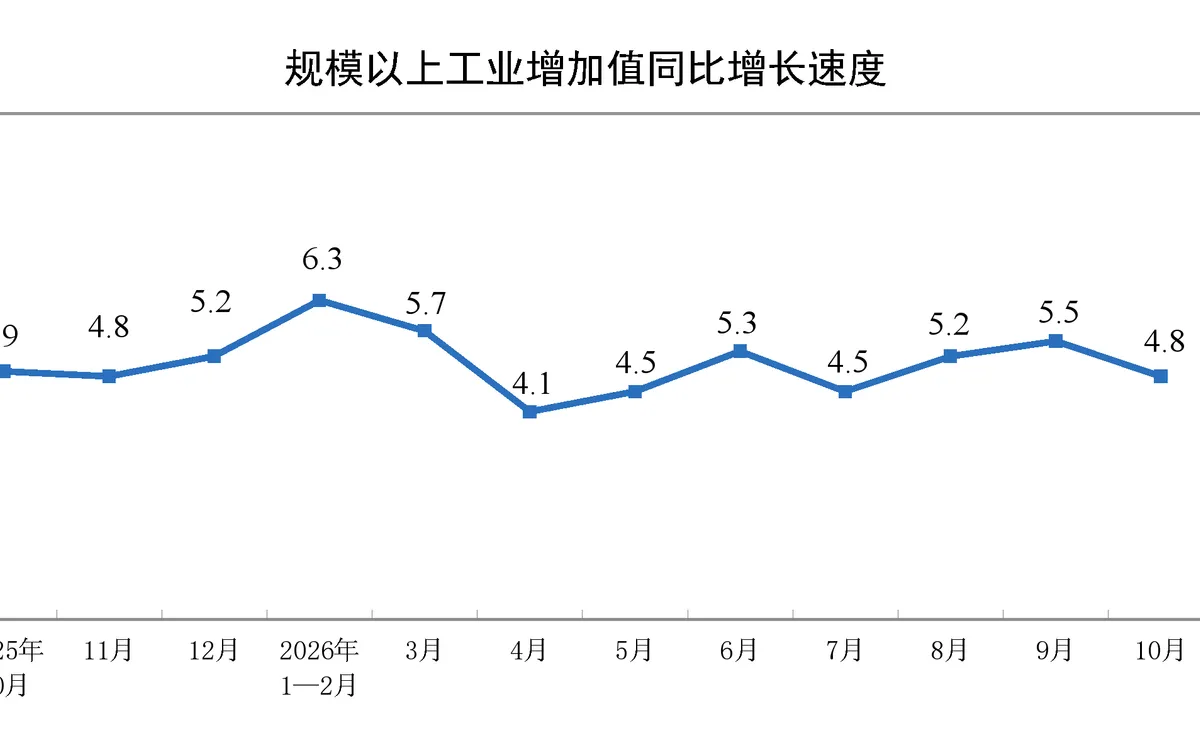
The same report put real value added in automobile manufacturing up 0.9% year over year in October and 6.5% through October. The broader industrial measure rose 4.8% in October and 5.3% over the ten months. Value added tracks economic output across industrial activities, while the vehicle rows count finished units. Both figures describe factory activity. Vehicle registrations and the volume manufacturers sent to dealers or exported require separate data.
Sources
- National Bureau of Statistics of China · 2026-11-16
- National Bureau of Statistics of China · 2026-10-19