
China’s August vehicle output falls 2.7% as new-energy production grows
Larger industrial enterprises made 2.697 million vehicles, including 1.647 million new-energy models. New-energy vehicles accounted for about 61% of the reported output.
China’s larger industrial producers made 2.697 million motor vehicles in August, down 2.7% from a year earlier, the National Bureau of Statistics reported on September 15. Output of new-energy vehicles rose 21.9% to 1.647 million. They accounted for about 61% of the reported August total, using the bureau’s product counts. New-energy output rose as the broader vehicle count fell.
The difference between the total and the new-energy count leaves about 1.05 million vehicles outside the new-energy category in August. That calculation uses two product lines from the same industrial table. It groups the remaining vehicles together and gives no split by fuel type or end market. Across all powertrains, the bureau separately counted 1.394 million SUVs, up 17.0%, and 857,000 saloon cars, down 22.7%. Those body-style rows do not isolate how many of each were new-energy models. From January through August, total vehicle production fell 3.3% year on year to about 20.31 million. New-energy output rose 11.3% to about 10.59 million. Their share over the first eight months was around 52%, below the August figure.
July’s release shows how the monthly comparison changed. The bureau recorded 2.529 million vehicles in July, down 0.1% year on year, and 1.55 million new-energy vehicles, up 29.9%. Both published unit counts were higher in August than in July. The August new-energy comparison against the same month a year earlier was slower than July’s, and the annual decline for all motor vehicles widened. The two unadjusted monthly unit counts do not control for the number of working days or the timing of production runs.
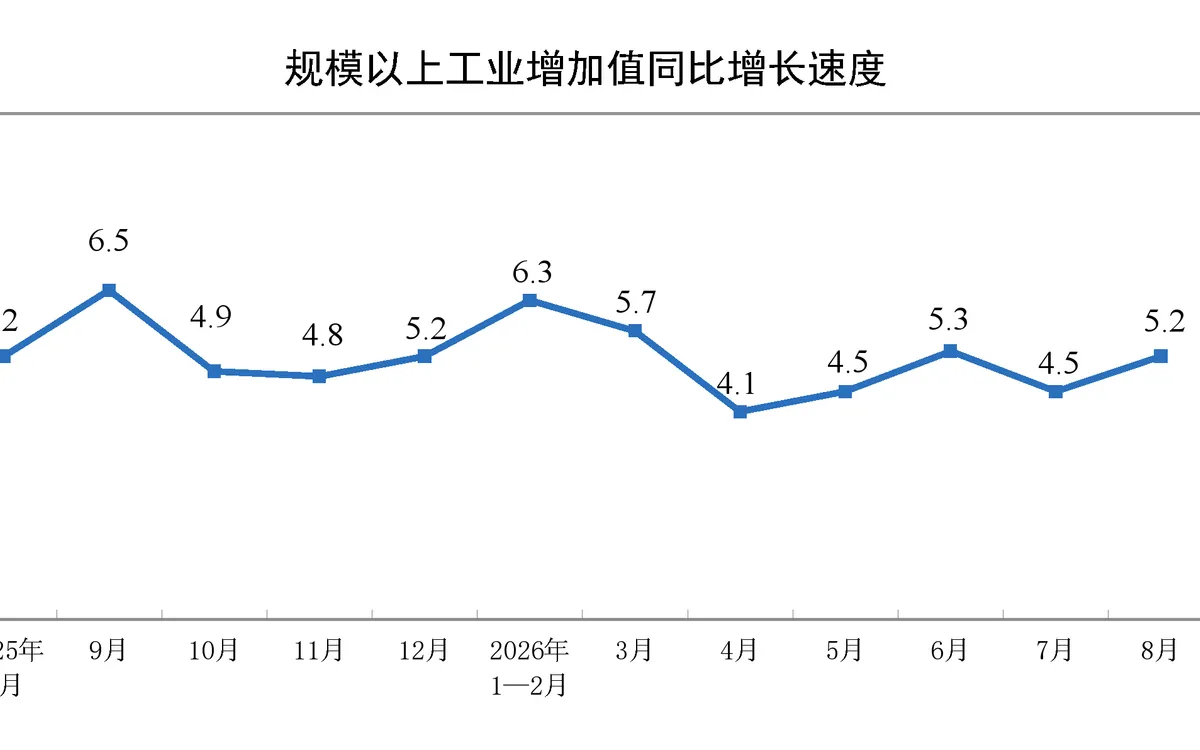
The bureau also reported that real value added in automobile manufacturing rose 8.7% year on year in August. That compares with 6.1% growth for manufacturing as a whole in the same release. Industrial value added is a measure of economic activity, while the product rows count completed units. The bureau’s industrial survey covers firms with at least RMB 20 million in annual revenue from their main businesses. Its industry percentage and vehicle totals therefore answer different questions about activity within that reporting population.
For component suppliers, the shift in what the factories built matters alongside the decline in overall units. Parts used on new-energy models can see stronger demand even when the total vehicle count falls. The data do not allocate production to particular companies or tell how many vehicles were bought in China, exported or added to stock. Those conclusions would require distribution and sales figures alongside the production table.
Sources
- National Bureau of Statistics of China
- National Bureau of Statistics, English August industrial release
- National Bureau of Statistics, July industrial production