
Chinese dealers report weaker autumn demand as inventory alert reaches 63.2%
CADA’s September survey found slower traffic and orders during the usual fall selling season. A separate stock-to-sales ratio also increased.
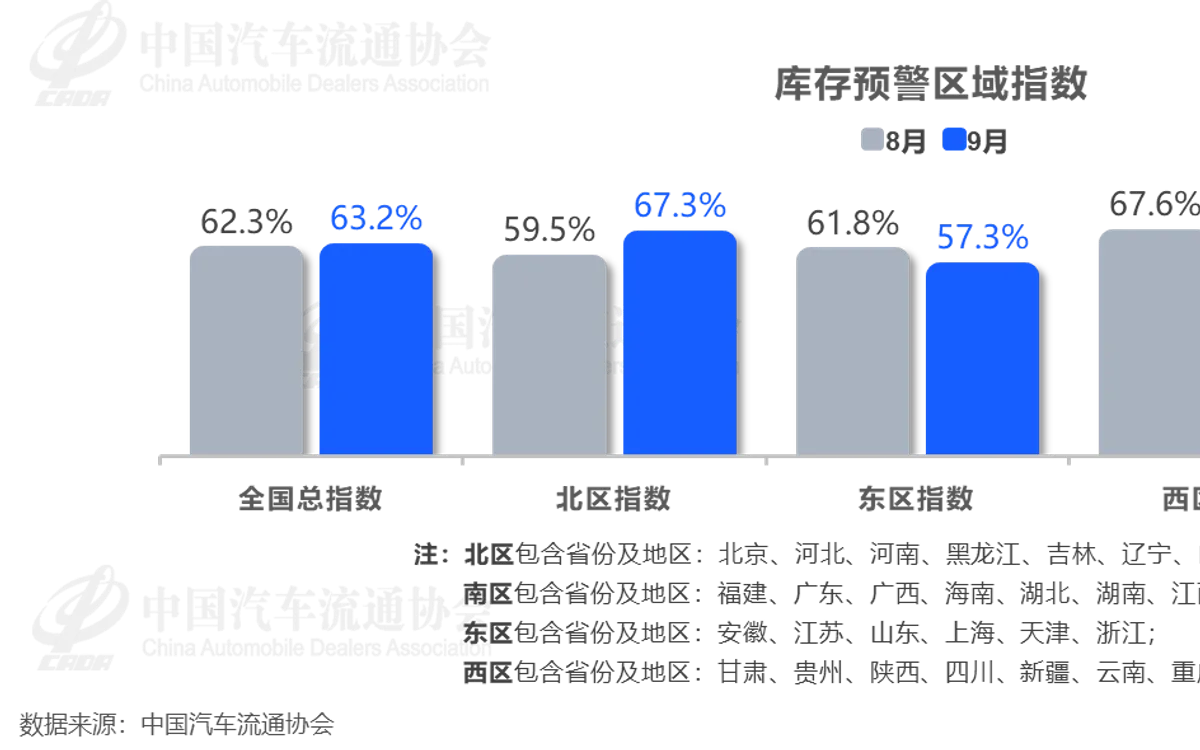
China’s dealer inventory alert index rose to 63.2% in September, up 0.9 percentage points from August and 8.7 points from September 2025. The China Automobile Dealers Association said on September 30 that dealers were seeing fewer visits and orders than in August. More than half of respondents said the usual September–October selling season was clearly weaker than in past years. The group cited longer decisions as customers waited for holiday motor shows or year-end promotions.
The association’s September survey found 54.2% of dealers considered the seasonal effect clearly weaker and 33.7% said it had largely disappeared. Only 3.6% considered it stronger. Respondents described stock ageing, difficulty selling unwanted models ordered with faster sellers, and delays receiving rebates. CADA’s demand and average daily sales subindices declined from August while its inventory subindex rose. Those findings explain what the higher composite reading is picking up in dealers’ operations.
The deterioration varied across survey regions. The north went from 59.5% in August to 67.3% in September. The west also reached 67.3% after a reading of 67.6% in August. The east eased to 57.3% and the south to 54.8%. These figures describe the association’s own dealer regions. They add detail to the national picture because the composite can rise even as dealerships in some regions report less pressure.
CADA uses a diffusion-index method for the measure, with 50% as its dividing line. Its appendix says the survey concentrates on large dealer groups covering around 2,000 of China’s franchised sales and service stores and 55 brands. The index includes financing and operating conditions, prices, stock, sales and demand. It is separate from the end-of-month inventory coefficient CADA published on October 13. That ratio, calculated by dividing stock by sales, rose to 1.68 in September from 1.58 in August.
Dealers were divided on the next quarter. The association reported 42.2% anticipating growth from the third quarter and 24.1% expecting the market to weaken further. It expected holiday activity to give some temporary support. In its subsequent October survey, the national index fell to 62.2%, staying above 50%, while the north’s reading reached 68.3%. The national readings describe dealer conditions around the holiday. The changes by region are more directly relevant to how individual distributors time orders, promotions and stock transfers.
Sources
- China Automobile Dealers Association, September alert index
- China Automobile Dealers Association, August alert index
- China Automobile Dealers Association, September inventory coefficient
- China Automobile Dealers Association, October alert index