
Suzuki tests towing shared mobility vehicles back into place in Osaka
A housing estate trial used autonomous and remotely operated robots to reposition ride-on vehicles and test deliveries of luggage.
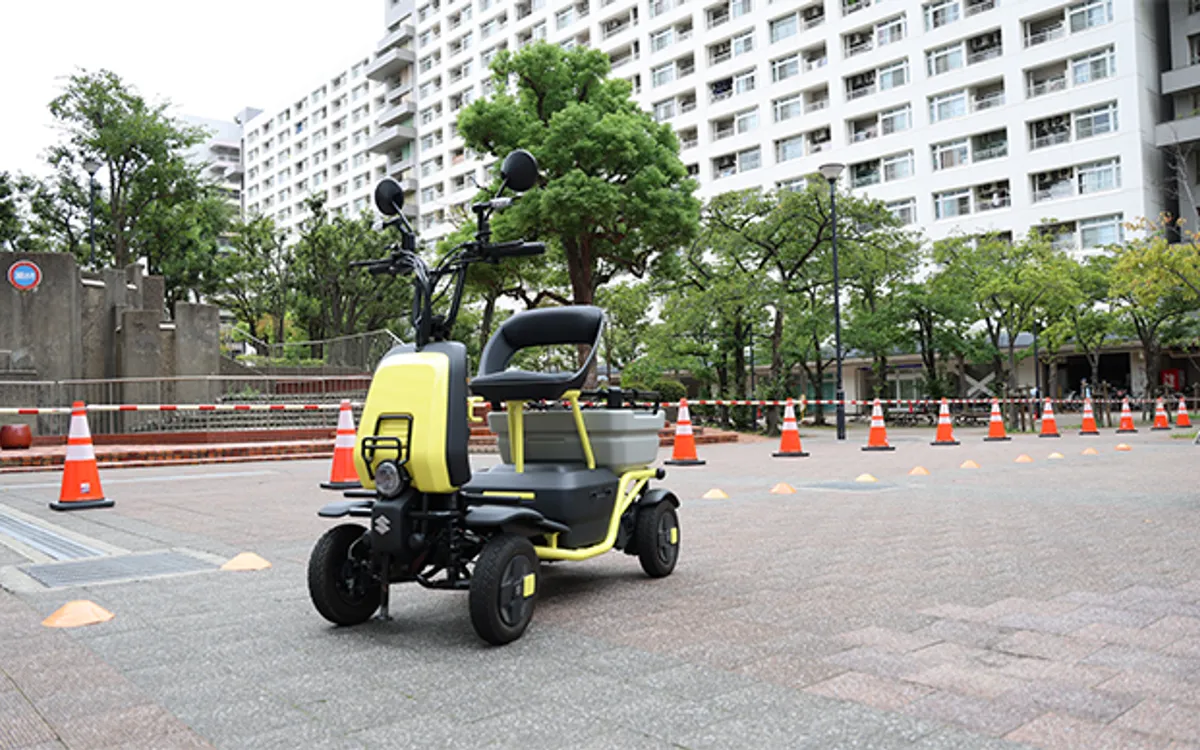
Suzuki joined a trial in Osaka on September 17 that used robots to reposition shared electric mobility vehicles inside the Morinomiya housing estate. The company provided its Suzuride 2 prototype, fitted with a tow bar for the test. The experiment explored how a vehicle could be dropped off after a short trip and moved back into position without the person who rode it having to bring it to a specific return bay.
The Osaka Chamber of Commerce and Industry and Japan's Urban Renaissance Agency selected the experiment under a programme testing new services east of Osaka Castle. Construction company Takenaka led the project with four other companies, including Suzuki. The team used the grounds of the second Morinomiya housing estate to test journeys within a neighbourhood where residents might use small vehicles for trips too short to make by car.
Takenaka's subsequent account describes three exercises. Participants rode a three-wheel stand-up vehicle and a four-wheel seated vehicle, observed how automated or remotely operated robots towed mobility equipment for a new user, and tried a remote robot service for moving luggage. About 30 applicants, including estate residents, took part. Some participants told the company they found the shared equipment convenient and welcomed the possibility of having heavy items taken to their homes.
Suzuki also said its MITRA electric cart served as the basis for equipment used by two partners. Yamazen brought a towing version of an autonomous mobile robot. AdaWarp Japan contributed a remotely monitored robot originally developed for construction work. Takenaka said that machine was already part of a separate field trial with the two companies. The Osaka test used it outside a construction setting to see how towing and goods movement might work around homes.
Neither Suzuki nor Takenaka gave a timetable for a paid or continuing service. The trial establishes that residents could try short journeys and see vehicles repositioned within a single estate. A housing operator considering the idea would still need to see how quickly vehicles can be recovered, how the tow route interacts with pedestrians and how often a remote operator has to intervene. Those operating details would determine whether the shared vehicles could stay available throughout a day.