
Subaru shows driver monitoring research alongside upgrades for cars already sold
Its Chiba exhibit explored signs of driver impairment. Subaru also presented existing owner upgrades and an automated Levorg test car.
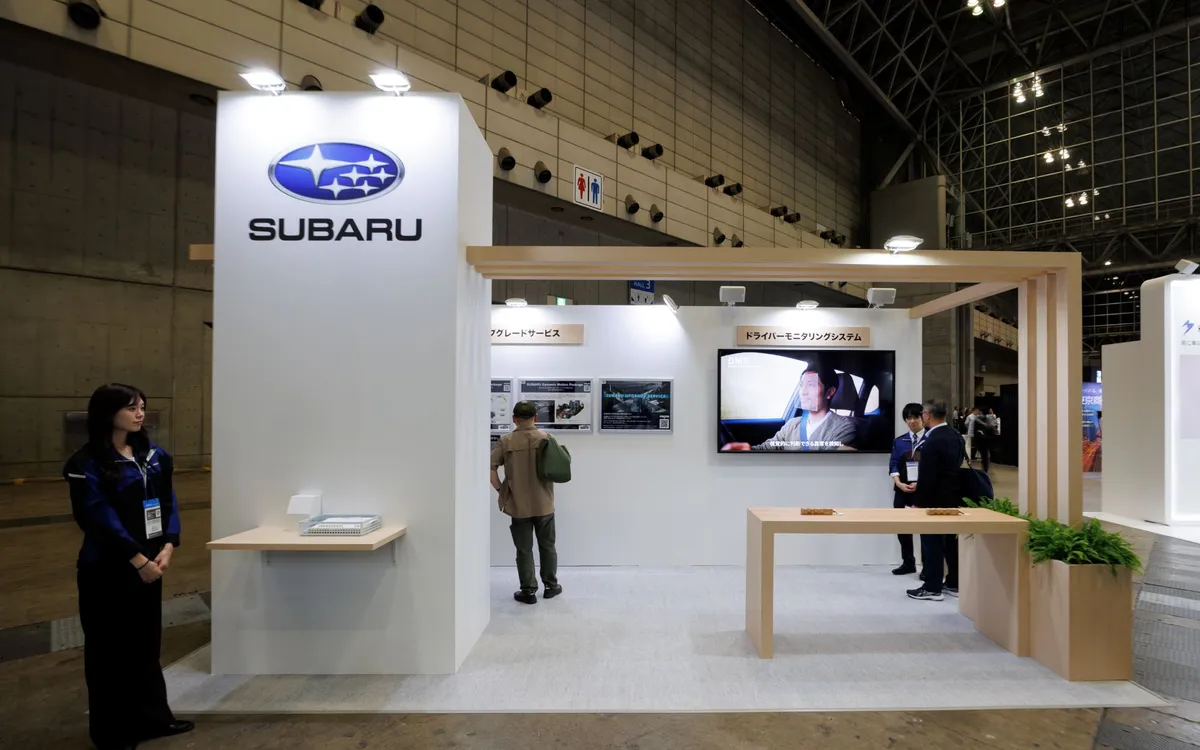
Subaru used Japan Mobility Show Bizweek in Chiba to show research aimed at identifying signs that a driver may be in difficulty. The company announced the programme on October 5 for the October 13–16 event. The show organiser said Subaru presented the work in videos and exhibits, using biological signals as a possible way to recognise warning signs before an emergency develops.
Subaru has already linked driver monitoring to assistance functions in production cars. Its safety disclosure says the Japanese Forester gained stronger integration in the fiscal year ended March 2025, allowing the system to react to distraction or drowsiness even when the driver is handling the wheel. It includes a warning using brief braking pulses. On applicable Subaru models, the emergency support system can bring the car to a stop after a driver fails to respond, using the hazard lights and horn to warn traffic nearby.
The exhibit concerns the earlier stage of recognising a change in the driver. Subaru described work to use biological information alongside monitoring. The display announcement provided no list of signals used, measured detection rates or vehicle fitment date. These details matter for suppliers because a sensor or controller needs to distinguish a genuine alert from normal driver behaviour across vehicles and operating conditions.
The company also showcased its Upgrade Service. Subaru had started taking advance reservations in February for separate hardware upgrades, including suspension and cabin noise packages for the VN-series Levorg. It quoted JPY 132,000 for the Dynamic Motion Package, including consumption tax and standard labour. The service gives dealers specific part and installation work on cars already sold, separately from the driver-monitoring research.
In the show's joint exhibition, Subaru displayed a Levorg-based automated driving test vehicle. The organiser said it uses information from road infrastructure and nearby vehicles to supplement what the car can detect. Together, the exhibits cover three decisions at different stages. Dealers can identify which cars qualify for the hardware packages, while suppliers interested in monitoring or infrastructure data need a defined vehicle programme and test requirements. Subaru provided those research directions at the show and left the specifications and production schedules open.
Sources
- Subaru Corporation
- Japan Automobile Manufacturers Association · Subaru exhibit recap and booth photo
- Subaru · driver emergency and monitoring systems in production cars
- Subaru · February hardware upgrade announcement