
Porsche rolls new PCM generation into 911, Taycan, Panamera and Cayenne
Porsche has announced a new PCM generation with up to five times the computing power of the previous system, plus a new interaction layer and expanded app ecosystem, for the 911, Taycan, Panamera and combustion and hybrid Cayenne. Rollout is gradual and varies by market, model, production date and equipment.
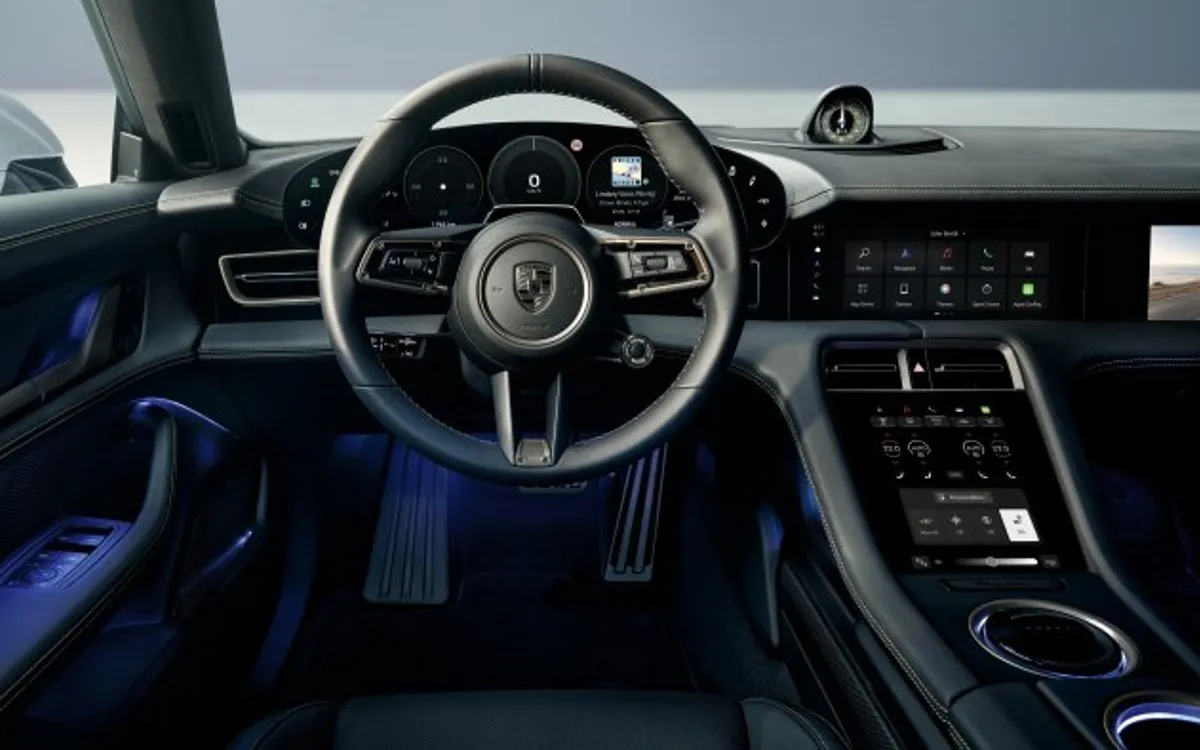
Porsche announced on 3 November 2026 that a new generation of Porsche Communication Management will be fitted across the 911, Taycan, Panamera and Cayenne model lines. The hardware platform, which Porsche says offers up to five times the computing power of the previous generation, underpins faster system start-ups, shorter loading times and smoother multitasking, and the company claims it provides the technical foundation for future digital functions.
The rollout covers four nameplates but not every variant equally. Porsche said the system will be introduced gradually in newly produced vehicles, with availability varying by market, model, production date and equipment. Porsche Digital Interaction, the design and operating language first shown on the Cayenne Electric, moves to the 911, Taycan and Panamera and to Cayenne models with combustion and hybrid powertrains, giving those cars a consistent menu logic and a rotatable 3D car model in its actual exterior colour.
Navigation Plus adds a 3D map display, online map data and real-time traffic information. In fully electric vehicles the Charging Planner schedules charging stops and accounts for battery preconditioning, a feature relevant to Taycan and electric Cayenne owners planning longer routes. The Voice Pilot is now AI-based on a large language model, which Porsche says allows natural-language, multi-step requests and follow-up questions across navigation, selected vehicle functions, media and selected apps.
The blended ecosystem strategy continues with an App Center for Porsche and third-party apps, which customers can select, download and update. Apple Music becomes available directly in the car through the App Center for the first time, with Spatial Audio by Dolby Atmos supported when paired with the Bose or Burmester 3D High-End Surround Sound systems. Porsche notes Apple Music requires a subscription, a Dolby Atmos-capable sound system and availability in selected Connect markets; other compatible apps can use Dolby Atmos through Apple CarPlay.
Smartphone integration deepens, including map display in the instrument cluster and EV routing with battery preconditioning in selected markets. Optimised Wi-Fi and wireless smartphone integration are part of the package. Porsche said comprehensive over-the-air updates let software and selected functions be developed after delivery, a shift in how the cars can be upgraded without a workshop visit.
Oliver Seifert, Porsche's head of Infotainment & Connect, said the combination of a modern system-on-chip architecture, the new interaction layer and the expanded ecosystem enables the company to continuously develop the in-car experience. The claim rests on the hardware's headroom, which Porsche quantifies only as up to five times the prior generation's computing power; the company has not published absolute benchmark figures.
For suppliers, the change ties more vehicle functions to a single chip platform and app storefront, raising the importance of software update capability and audio hardware certification for Dolby Atmos. For dealers and fleet operators, the practical distinction is that identical-looking cars built on either side of the production change may carry different systems. Porsche has not detailed which markets receive which functions first, nor a completion date for the gradual rollout.