
Milence opens fifth Belgian truck-charging hub in Temse with four 1,500 kW MCS/CCS bays
Milence opened an eight-bay truck charging hub in Temse, Belgium, on 22 October 2026, its fifth site in the country. Four bays carry hybrid MCS/CCS chargers rated up to 1,500 kW and four carry CCS units rated up to 400 kW, with Belgium tariffs starting at €0.379/kWh excluding VAT, the same rate for both connector types.
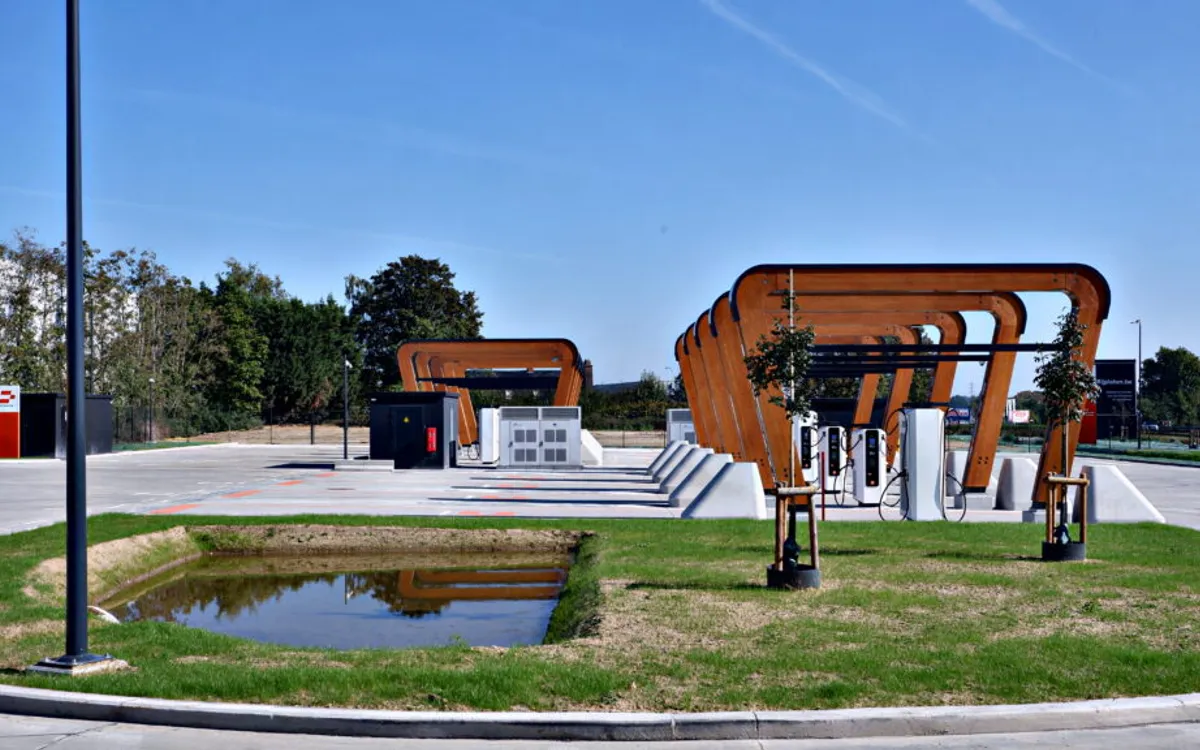
Milence opened its fifth charging hub in Belgium on 22 October 2026, siting eight bays in Temse between Antwerp and Ghent on the North Sea–Mediterranean TEN-T corridor. Four of the bays use hybrid Megawatt Charging System and CCS chargers rated at up to 1,500 kW, and the other four use CCS chargers rated at up to 400 kW, the Amsterdam-based operator said.
The split lets one site serve both fleets still running standard CCS trucks and vehicles equipped with MCS connectors, rather than forcing operators to choose a corridor segment built only for the newer standard. The four CCS bays cap at 400 kW, below the 1,500 kW ceiling on the hybrid units, so a truck's charge curve depends on which bay it occupies.
Milence priced Belgian charging at €0.379/kWh excluding VAT for ad hoc sessions, applying the same rate to CCS and MCS charging. Volume-based agreements are also offered. Equal pricing removes a reason for operators to avoid MCS bays while the installed base of MCS-equipped trucks remains small, though the tariff is a published starting rate, not a measured cost per kilometre.
The hub sits inside the European MACBETH project, which tests MCS for heavy-duty electric trucks under real freight conditions. Milence said further MACBETH updates are expected in early 2027, covering progress on that testing and next steps toward larger-scale MCS deployment. Until then, the Temse bays function as operational charging points and as a testbed, not proof of fleet-wide MCS performance.
Temse is the fifth Belgian location in what Milence calls a corridor-first strategy, placing public chargers where freight volumes are high along main routes toward France and southern Europe. The company has not disclosed the power capacity available at the site, the number of trucks it expects daily, or construction cost, so utilisation and grid limits at Temse remain unverified.
Driver facilities include toilets, showers, coffee, vending machines and outdoor seating. Milence frames these as part of aligning charging stops with mandatory rest breaks, the practical argument for high-power truck charging: a session that fits inside a regulated break adds no separate dwell time. That argument depends on bay availability, which the operator has not quantified.
The opening adds MCS-capable capacity on a corridor used by international hauliers, but the material question for fleets is deployment, not announcement. Four MCS-capable bays at a single Belgian site will not by themselves shift long-distance operations to electric trucks, and MACBETH results due in early 2027 are the next dated checkpoint against which the real-world case can be judged.