
LG and Seoul National test a manganese-rich battery in 40 Ah cells
The research team reported 92.2% energy retention after 883 cycles in pouch cells. The result measures laboratory cycling at a size closer to vehicle cells.
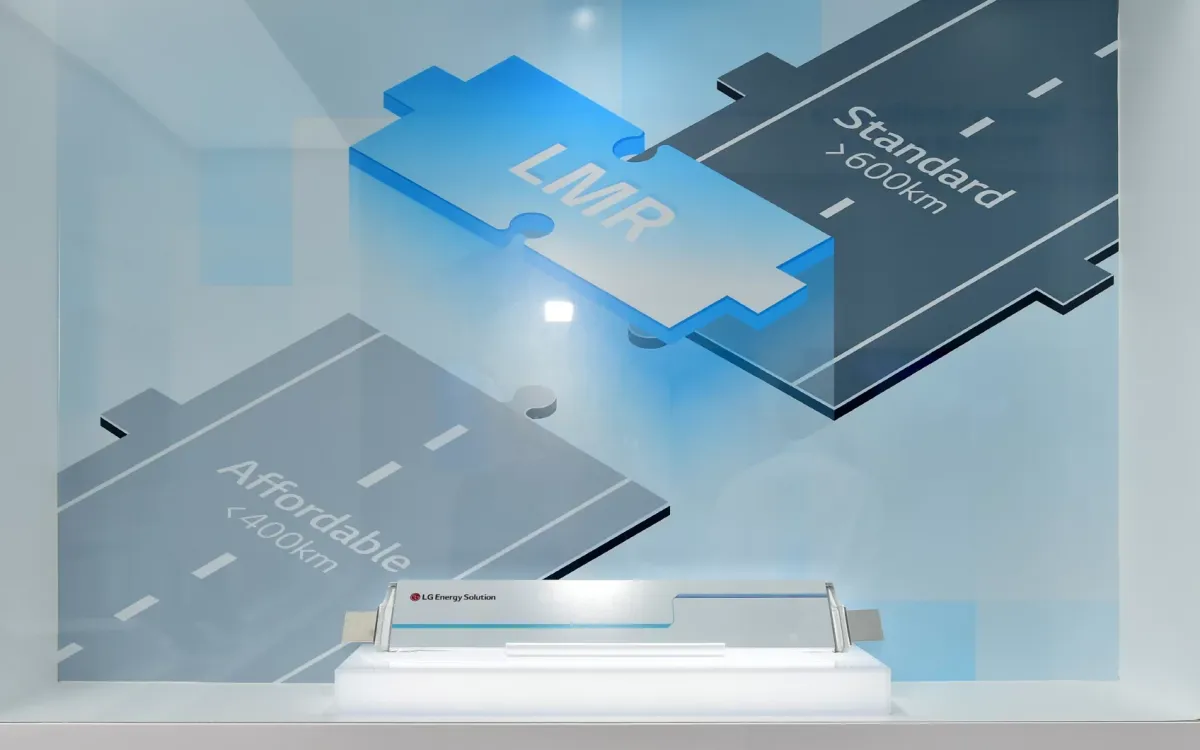
LG Energy Solution said on September 7 that it and Seoul National University tested a manganese-rich battery design in 40 ampere-hour pouch cells. The cells retained 92.2% of initial energy after 883 charge and discharge cycles. The testing used a cell format closer to what automakers would evaluate for vehicle batteries and addressed gas generation, one source of deterioration in this type of cathode.
The authors reported the work in Nature Communications. They used a lithium-manganese-rich layered oxide cathode blend containing 0.27% cobalt by weight and a graphite negative electrode. Manganese is attractive to battery developers seeking to limit their dependence on cobalt. The cathode also stores energy through oxygen reactions as well as through reactions involving metals. That additional reaction is part of the chemistry's appeal, but it can also leave the electrode structure less stable over repeated charging and discharging.
The research found that both ends of the voltage range matter. In the researchers' comparison, reducing the upper cutoff from 4.6 to 4.3 volts raised the proportion of oxidised oxygen reduced on discharge from 86% to 97%. Extending the lower voltage limit from 3.0 to 2.0 volts allowed more complete recovery. They drew on multiple techniques to track oxygen chemistry and gas evolution. The results informed the way LG conditioned the larger cells during their first cycles and the voltage range used in subsequent cycling.
The paper gives a specific energy of 663 watt-hours per kilogram of active material in the positive electrode. A vehicle battery's weight also includes the negative electrode, electrolyte, casing, cooling and pack hardware. For an automaker comparing candidate chemistries, the reported specific energy therefore describes the research material and the retention figure describes the laboratory cell's cycling performance. Pack energy and performance require measurements at those levels with the relevant equipment included.
The joint work moves an oxygen-stability question from materials experiments to a pouch cell of a size closer to automotive use. LG identified no vehicle programme or series production date in its announcement. The immediate value for cell developers and automakers is a measured durability result at a specified cell capacity, with a peer-reviewed explanation of which charge and discharge conditions produced it. Testing in vehicle duty cycles and production qualification remain separate steps.