
FAW and GAC set up a joint group to advance vehicle and battery projects
China FAW chairman Qiu Xiandong and GAC chairman Feng Xingya opened a joint working group at GAC headquarters in Guangzhou on October 22, 2026, to move projects under earlier cooperation frameworks into execution across passenger and commercial vehicles, batteries, electric drives, intelligent vehicles and overseas operations.
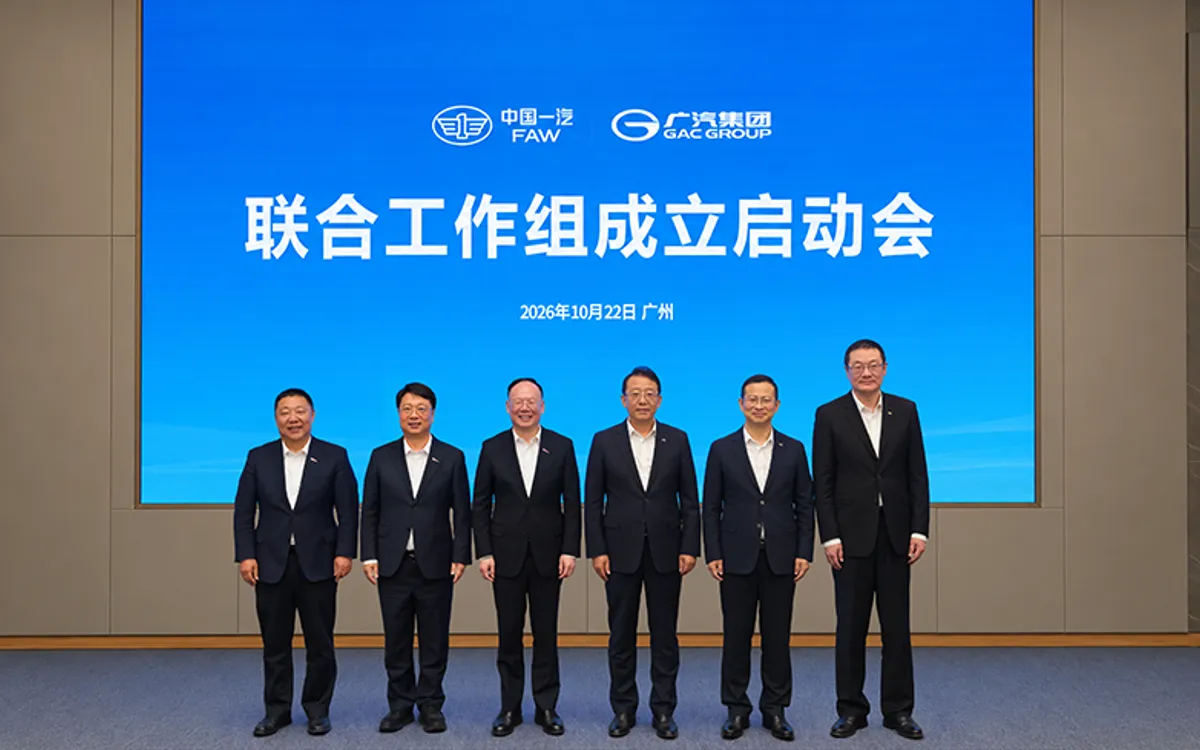
China FAW and Guangzhou Automobile Group launched a joint working group at GAC headquarters in Guangzhou on October 22, 2026, GAC said. FAW chairman Qiu Xiandong and GAC chairman Feng Xingya attended the launch and held working talks, with both sides stating the group will advance projects under previously signed strategic cooperation framework agreements. Qiu named passenger vehicles, commercial vehicles, batteries, electric drives, intelligent vehicles and overseas operations as the areas to move quickly.
The working group follows two framework agreements. GAC Industrial and FAW signed one on September 29; FAW, Toyota Motor and GAC signed a new strategic framework on October 8 with support from the Guangzhou municipal government. GAC said the October 22 meeting and launch are the key step in implementing those frameworks. The new body is intended to coordinate that work. GAC’s announcement listed no project budgets, production volumes or plant allocations.
Feng asked teams to develop detailed plans and fix completion milestones for the work. The two chairs named areas that could involve quite different teams at an automaker. Vehicle projects involve engineering and production, while motors, batteries and overseas operations can require decisions by procurement, suppliers and regional businesses.
Qiu tied the cooperation to national policy, citing the 15th Five-Year Plan for intelligent connected new energy vehicle industry development and a national advanced manufacturing conference. He framed the tie-up between a central state-owned enterprise and a local state-owned automaker as a demonstration model. The reference matters to both companies: FAW is controlled by the central government, while GAC is a Guangzhou municipal state-owned group, so the arrangement crosses two levels of state ownership.
On the GAC side, Feng linked the cooperation to the company's own "Panyu Action" reform program, which it says is accelerating technology transformation and expanding whole-chain operations. The announcement did not say how work under the group would be divided between the two companies, whether any projects are already at an investment or procurement stage, or which GAC units and FAW units would staff the working group.
For suppliers selling into both companies, a working group establishes a place for decisions on specific components or factory programmes. Such decisions would require more detail on the projects and their owners. The October announcement identifies the fields being discussed and links them to earlier agreements. It does not give a timetable, a funding commitment or a volume target.