
US auto credit edges wider as buyers carry more negative equity
Dealertrack’s October index reached 107.1, its highest since April 2015. The share of loans with negative equity climbed to 58.7% while the average contract rate rose to 11.46%.
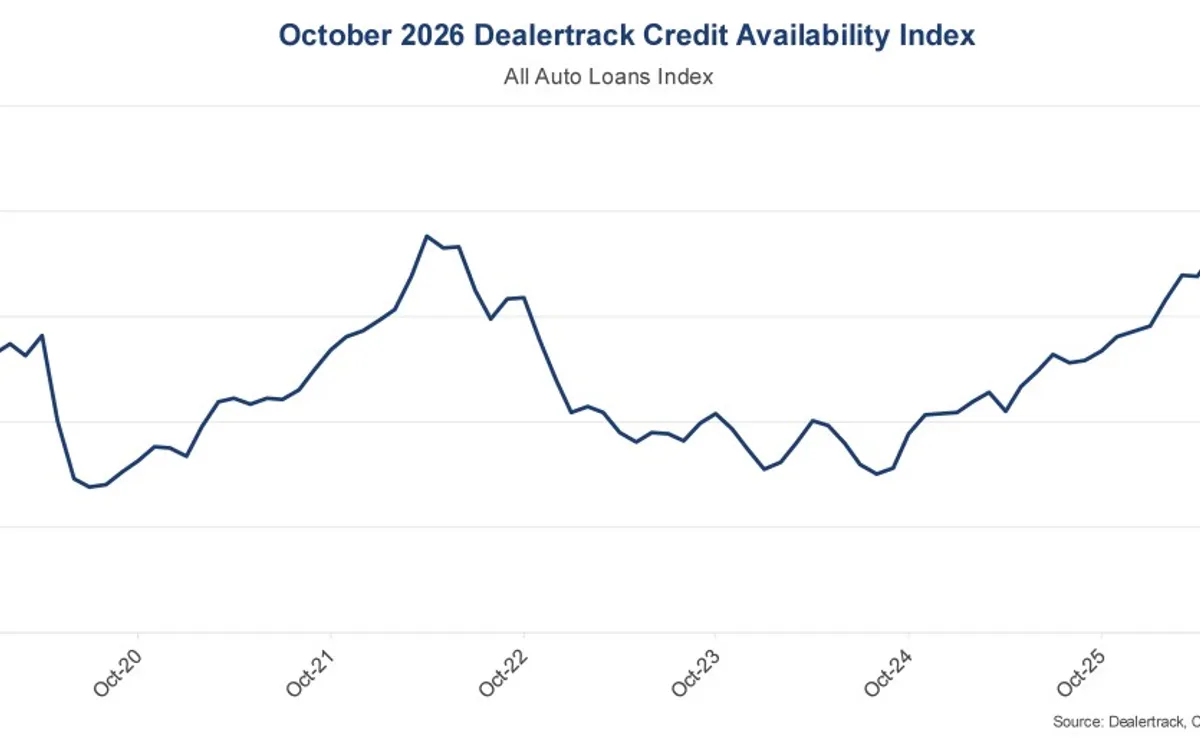
US auto credit became slightly more available in October 2026 as subprime borrowing and negative equity rose, Cox Automotive said on November 10. Its Dealertrack Credit Availability Index increased 0.1% from a revised September reading of 107.0 to 107.1, the highest level since April 2015. Credit access has increased for six months in a row by this measure. Borrowers still faced a higher average contract rate in October, and more loans financed more than the vehicle was worth.
The subprime share of loans rose half a percentage point to 17.9%, its third consecutive monthly gain and the largest contributor to the index increase. Negative equity climbed nine-tenths of a percentage point to 58.7%, with the biggest increases in used-vehicle channels, Cox said. The share was 53.8% a year earlier. Carrying previous debt into a replacement vehicle can help a buyer complete a purchase today, while leaving less flexibility to sell or trade the replacement later.
The overall approval rate rose to 73.9%, an increase of two-tenths of a percentage point. Cox said the change largely followed the exit of a near-prime lender whose low approval rate had weighed on the average. Approval rates actually declined across most channels and lender types. Cox reported that credit access for certified pre-owned vehicles improved 1.3% over September, while the broad new-vehicle measure fell 0.3%. Those differences matter for a dealer assessing whether a wider aggregate measure will apply to a particular vehicle or application.
The average contract rate reached 11.46%, up 24 basis points from September. The five-year Treasury yield rose 13 basis points to 4.93%, leaving the difference between those rates at 6.53 percentage points. The share of loans running longer than 72 months fell from a record September level to 31.1%, although it remained above the 27.7% reported a year earlier. Cox said the wider yield spread and the lower share of long loans offset much of the contribution from higher subprime lending.
Dealertrack combines six indicators in the index, with January 2019 set to 100. It tracks loan approvals, subprime share, yield spreads, term lengths, negative equity and down payments. For dealers and lenders, October’s reading distinguishes access to a loan from its cost and structure. The overall index barely moved while monthly increases in borrowing rates and debt carried into loans changed the deals buyers were able to complete.