
Smart cockpits drive China’s passenger-vehicle technology index to 44.5
CPCA and Shanghai Anluqin reported a September rise in cockpit and driving features on vehicles sold at retail. The exterior component fell from August.
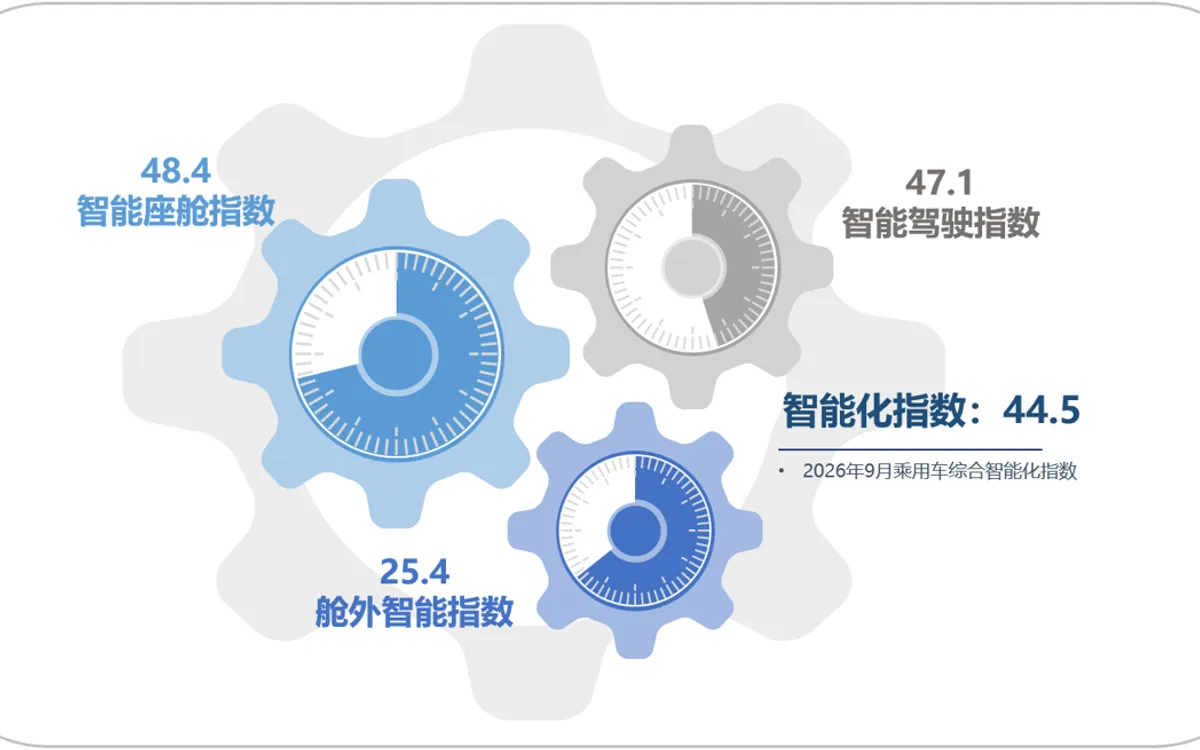
Chinese passenger vehicles with qualifying cockpit features made up a larger share of September retail sales, helping lift the industry’s technology adoption index to 44.5. The China Passenger Car Association and consulting firm Shanghai Anluqin published the figure on October 30. The cockpit component reached 48.4, up 5.2 points from August. That was the largest monthly move among the three measures in the index.
The driving technology component reached 47.1, up 2.9 points from August and 7 points from a year earlier. Exterior technology fell 0.7 points from August to 25.4, even as it remained 6.9 points above September 2025. The cockpit figure was 9.9 points higher than a year earlier. Together, the changes show the mix of monitored equipment moved differently across the three areas. The composite gives cockpit technology almost half the weight, so an increase there affects the headline more than an equal move in the exterior component.
The index combines the association’s monthly retail data with Anluqin’s model-level equipment checks. The consultancy draws on samples from dealerships in major cities. Within each component it counts the retail share of models that meet at least one of the qualifying criteria. A model that meets several criteria in the same category counts once. The publishers weight the scores at 47.5% for cockpit technology, 37.5% for driving technology and 15% for exterior technology. That produces a weighted score across adoption categories, and an individual model can contribute to multiple categories.
Cockpit criteria span equipment such as screens and processors, software including over-the-air updates, and interfaces such as voice and touch. Driving criteria include equipment and functions such as sensors, remote parking, and highway navigation assistance. Exterior features cover interaction outside the cabin, with examples including lights, smart keys and intelligent doors. This broad equipment measure captures how widely specified technology is present in models sold. The published method does not evaluate whether owners activate it or how well a driving feature performs in use.
The publishers connected September’s rise to more high-end new-energy models in the sales mix and a concentration of new vehicles with qualifying equipment. New-energy vehicles accounted for about 67% of September passenger-vehicle retail, even as total retail fell year on year. Suppliers tracking the index should read the results alongside model and powertrain mix. A move in the score can reflect a change in what consumers bought without a change in equipment on any individual model. The publishers say they may also raise the qualifying standards once a component reaches its medium-term target.