
Audi details home power export for the compact A2 e-tron
The A2 e-tron supports external devices and compatible bidirectional home chargers. Audi has outlined a separate, market-dependent path for public grid export.
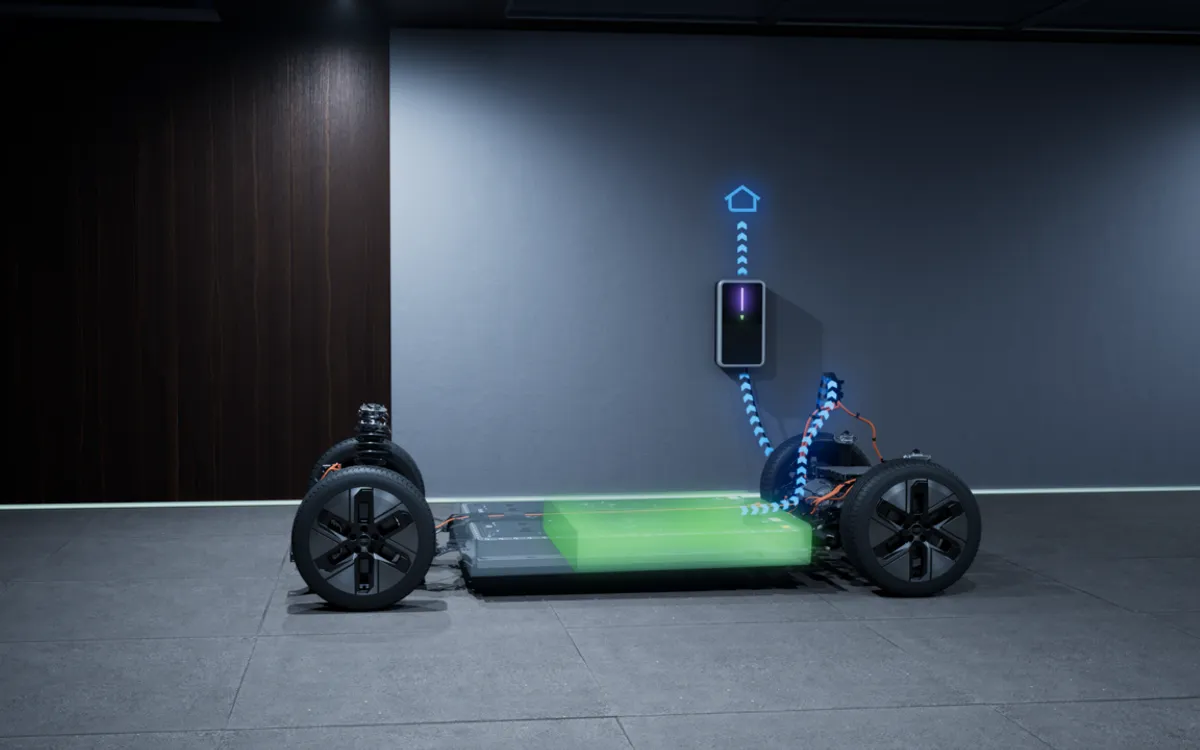
Audi said on 12 November that the A2 e-tron can run suitable external equipment and share power with a home through a compatible bidirectional DC wallbox. The compact electric car is available to order with three battery sizes. Audi also described a future public grid export function, whose availability will depend on the equipment, installation, market rules and, where applicable, a compatible electricity tariff.
The three battery options use two chemistries. The 52 and 61 kWh packs use lithium iron phosphate cells, which Audi integrates directly into the packs. The 84 kWh option uses nickel-manganese-cobalt chemistry. The different batteries do not change the distinction between powering a device and exporting electricity to a building. Vehicle-to-load can supply suitable external equipment. A vehicle-to-home installation needs a compatible bidirectional wallbox that can draw from the battery into the household system.
Audi says the thermal management system coordinates battery temperature, current and state of charge during charging and discharging. The battery controller uses a different algorithm for the LFP systems because their voltage can change less as the pack’s state of charge varies. That matters when the same battery must track the energy left for a journey while also providing electricity away from the road. Audi did not publish the car’s home export rate or a list of wallboxes in the announcement.
Earlier in November, Audi put preliminary combined consumption for the 140 kW A2 e-tron with its optional efficiency package at 12.8 kWh per 100 kilometres on the WLTP cycle. The figure applies to that configuration. Audi attributes the result partly to silicon carbide power electronics that reduce switching losses and to changes to the rear drive motor and gearbox. The 125 and 140 kW versions use a different gear ratio from the 170 kW version, keeping the motors in different parts of their operating range.
For dealers and installers, home export is an equipment and installation question alongside the choice of battery. The vehicle specifications describe what can leave the pack, but the customer needs a matching DC wallbox and home installation to use the stored energy indoors. Public grid export involves further regulatory and tariff decisions. Audi gave no market launch date for that function, so it is separate from the A2 e-tron’s current household and device applications.