
Peru’s vehicle trade and repair activity rose 23.6% in September
Peru’s auto association reported growth across an activity measure that includes vehicle sales, servicing and repair. Fleet demand, motorcycle finance and replacement parts all contributed, it said.
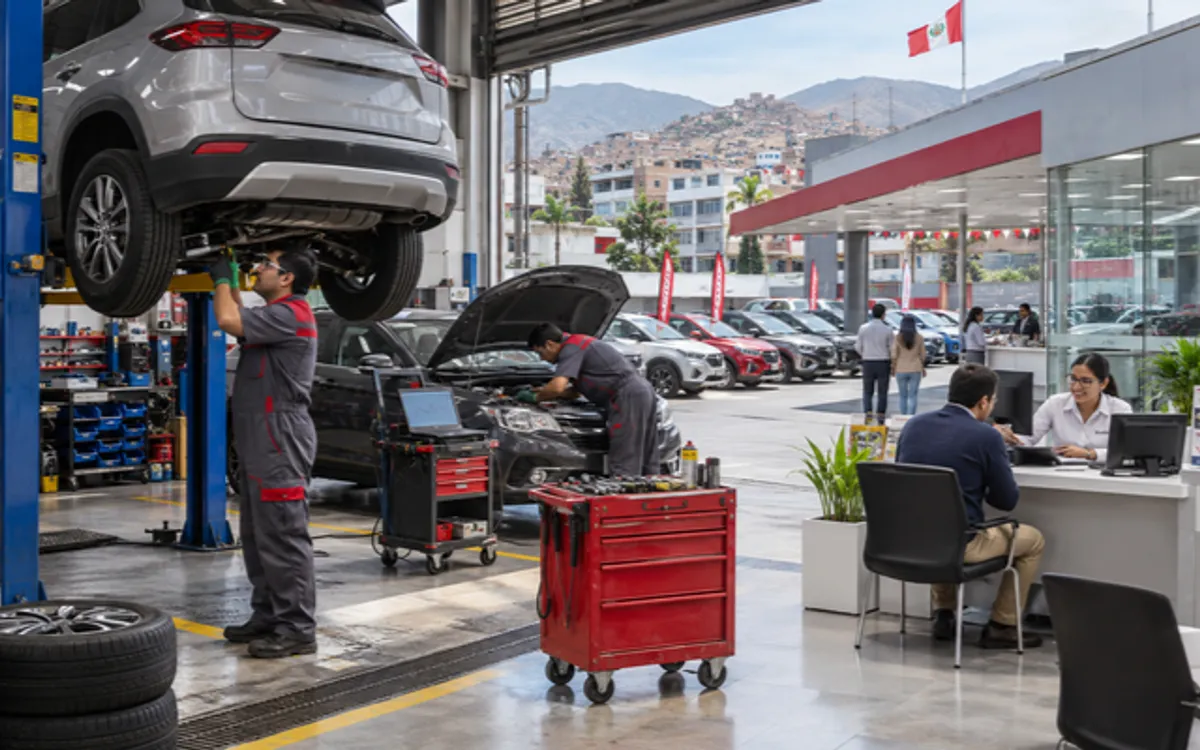
Activity in vehicle sales, maintenance and repair in Peru rose 23.63% in September from a year earlier, the Automotive Association of Peru said on November 17. The group used data from the national statistics agency, INEI. It put growth for the first nine months of 2026 at 24.56%. The indicator covers activity across automotive trade and services, including work done on vehicles after they have been sold.
The association put national economic growth at 2.43% for September and the broader commerce sector’s increase at 6.29%. Retail trade grew 5.10% and wholesale trade 4.46%, according to the same account. Those are comparisons with the same month of 2025. The different rates give a buyer or supplier a way to see how much faster automotive activity in this measure grew than its wider business environment.
The association cited renewal and expansion of light and heavy fleets, the availability of dealer inventory and improved financing access for motorcycles as factors behind the result. It also pointed to demand for tyres, engine parts and filters and to maintenance and repair work associated with mining contracts. New fleet purchases and upkeep on working vehicles bring revenue to different businesses. The report identifies both sources of demand, although it does not separately quantify each one’s contribution to the September increase.
The association publishes vehicle sales counts in a separate series. Its October market report lists 216,970 light vehicles sold in the first ten months, an increase of 42.7% from the same period in 2025. That figure counts units over a different period and for a particular part of the market. It does not measure the same activity as September’s 23.63%, which includes work done by workshops and suppliers after a vehicle enters service.
The association identified potential changes in inflation, interest rates and weather tied to El Niño as risks for consumer and investment decisions. It also called for scrappage programmes and inspections to help turn higher vehicle sales into a renewal of the vehicles actually in use. For parts makers and workshops, the September release gives evidence of rising demand beyond new registrations. For dealers and fleets, the separate unit series gives a more direct measure of how many new vehicles are entering the market.
Sources
- Asociación Automotriz del Perú
- Automotive Association of Peru, October vehicle market and sales tables