
The first Maruti 800 receives FIVA’s world heritage award
FIVA honoured the small car delivered in 1983 as one of 21 vehicles recognised in its inaugural awards. Maruti later made more than 2.9 million.
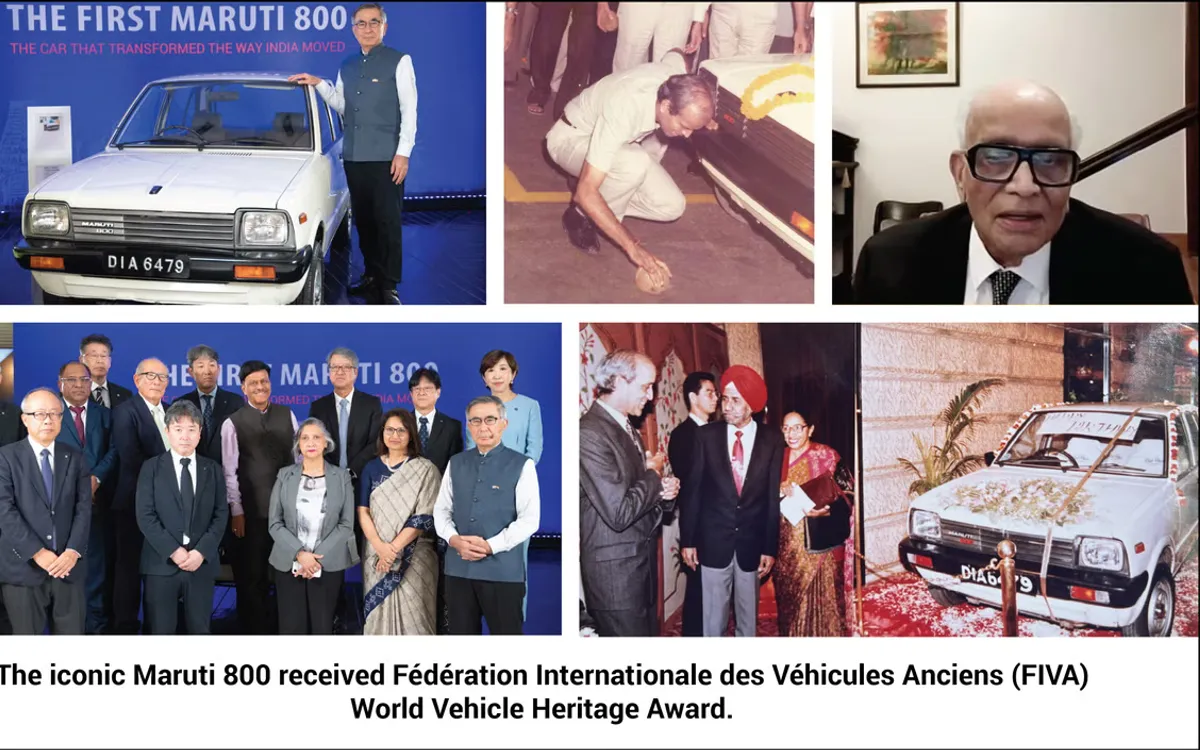
Maruti Suzuki announced on November 16 that the first Maruti 800 had received the Fédération Internationale des Véhicules Anciens' World Vehicle Heritage Award. FIVA presented the award on November 13 during its general assembly in Brussels, part of the organisation’s 60th anniversary celebrations. The group recognised 21 vehicles from 20 countries in the first edition of the programme. Maruti said its small hatchback was the sole Indian vehicle on the list.
FIVA cited the specific Maruti 800 with chassis number 100014. Prime Minister Indira Gandhi handed it to its first owner on December 14, 1983. The award describes the car's place in the expansion of personal transport in India and its role in the growth of the country's manufacturing base. FIVA's awards also recognised vehicles such as Slovenia's Tomos moped and Brazil's Romi-Isetta. Its collection brought together relatively ordinary vehicles and rare historical examples.
Suzuki entered India through a joint venture with the government in 1982. Suzuki Motor president Toshihiro Suzuki said the Maruti 800 was the first car the venture made in December 1983. He put its initial production scale at 40,000 cars a year and said more than 2.9 million Maruti 800s were built over the following three decades. Those numbers describe the model that followed the first car. The award identified the particular example that marked the start of deliveries.
The Maruti 800 also opened an export route for the company. Maruti and Suzuki dated its first exports to Europe to 1987 and named Hungary, France and Belgium among the early destinations. That history gives the car an industrial significance beyond the domestic vehicles it replaced or competed with. A venture established to make an affordable car for Indian drivers was also able to begin supplying vehicles to markets abroad.
FIVA used the inaugural awards to recognise the influence of vehicles on everyday life and national industries. In the Maruti 800's case, that influence rests on a mass-produced vehicle and the specific first delivery from which the company traces its operations. The production and export milestones provide a measure of how far the programme developed after the initial handover. The award places that manufacturing and ownership history alongside other vehicles preserved for their role in how people travelled.