
Hyundai and KOICA launch Ghana training for hybrid and EV maintenance
The five-year programme will fund two training centres and new maintenance curricula. Hyundai expects it to reach 405 young people and teachers.
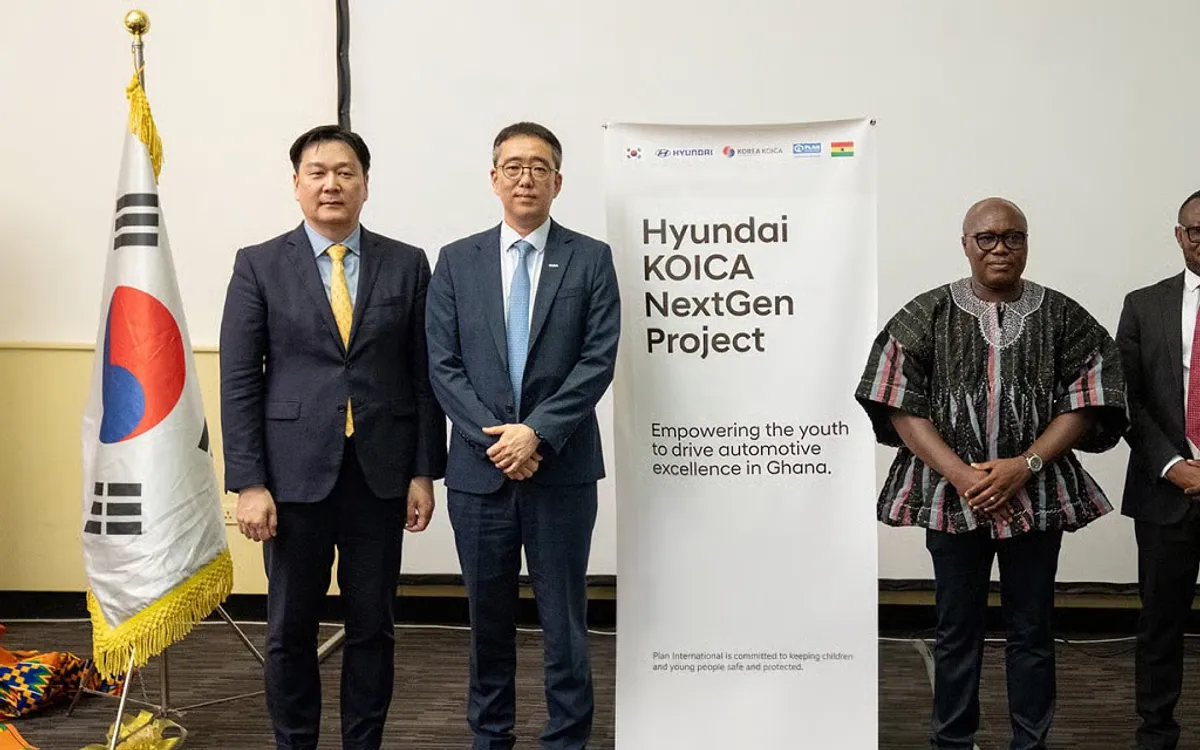
Hyundai Motor and the Korea International Cooperation Agency launched an automotive technician training programme in Ghana at a ceremony in Accra on September 3. The partners plan to contribute equal shares of KRW 5 billion over five years. The programme will update instruction for combustion vehicles and add courses for maintaining hybrids and electric vehicles.
Hyundai says the project will set up two training centres with facilities for practical maintenance work. The centres will train teachers who can take those courses to students at nearby technical schools. The plan calls for Ghana’s Commission for Technical and Vocational Educational Training, under the education ministry, to certify the updated curriculum. That links the new classes to the local training system as well as to the equipment provided at the two centres.
The company said a planning assessment found gaps in both facilities and instruction. It reported that 80% of institutions covered in its account lacked an up-to-date curriculum, 70% of training equipment was more than ten years old and only one quarter of instructors had knowledge of electronic diagnostics. It put the share of instructors with experience of electric vehicles at 12.5%. Hyundai’s release does not describe the sample in detail. The figures explain the partners’ focus on training instructors and providing equipment for practical courses.
Plan International Korea and Plan International Ghana are involved in implementing the programme. It also includes internships, scholarships for vulnerable students, annual job fairs and support for starting a business, according to Hyundai. The company expects to reach 405 young people and teachers across the programme. That total includes people receiving support at different stages and does not represent the number of certified graduates or people already placed in workshops.
For service businesses, the course mix relates to two types of work. Vehicles already in the fleet still require combustion-engine maintenance, while hybrids and EVs bring additional diagnostic and servicing tasks. The partners have defined the funding period, training-centre count and population they expect to support. Their September release gives no dates for opening the centres or for the first group to complete its studies. Employers will be able to judge how closely the courses fit workshop needs once the centres are operating and trainees begin moving into internships and jobs.