
BYD tests welding and paint operations at Brazil’s Camaçari plant
The Bahia plant is preparing to add body manufacturing stages alongside vehicle assembly. Stamping construction is still underway as BYD targets a shift to local production in early 2027.
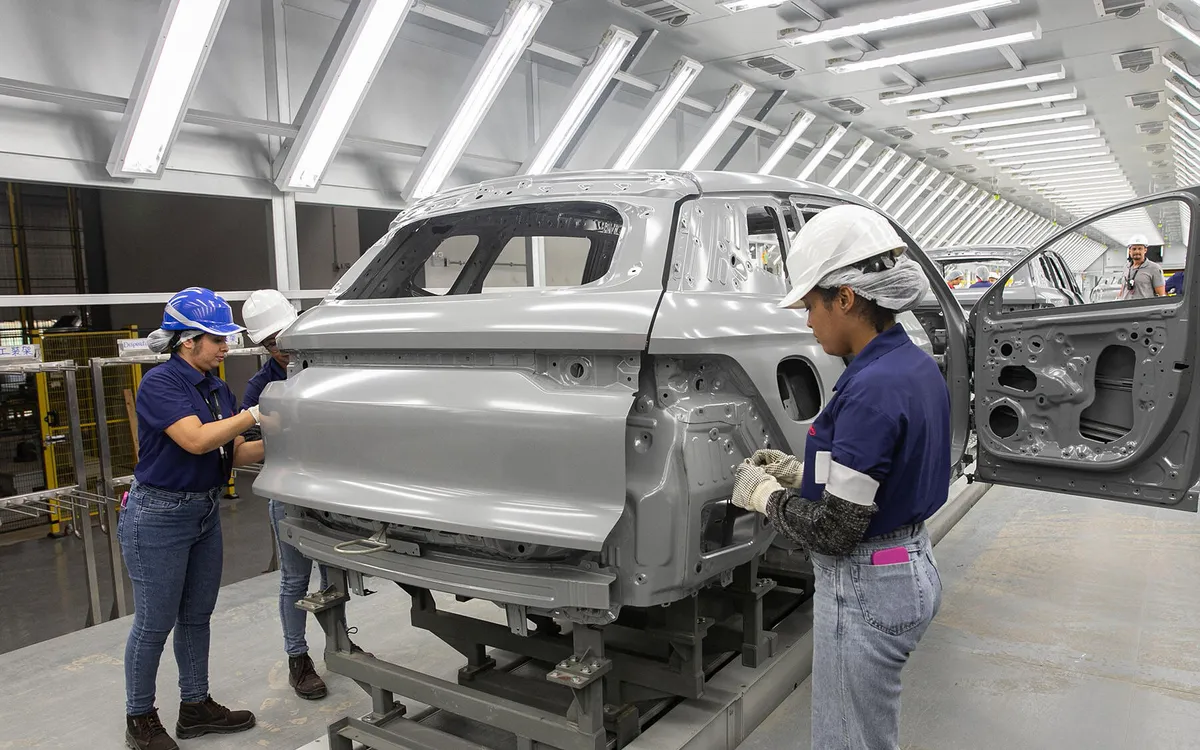
BYD said on October 26 that it had finished civil construction and reached advanced operating tests in the new welding and paint buildings at its Camaçari vehicle complex in Bahia. Work on the stamping building was still in progress. Those three operations will give the site more of the manufacturing steps needed to turn sheet metal into finished vehicle bodies alongside its existing vehicle assembly operation.
The announcement distinguishes the stage of each operation. Welding and painting had progressed to advanced tests, and the stamping hall was at an advanced stage of construction. More than 1,100 staff had been recruited and were in training for the new operations, BYD said. It planned to hire another 500 direct employees by the end of 2026 for welding, painting and stamping. The stated target was to move into localised production at the beginning of 2027.
Camaçari was already assembling vehicles while the new buildings were taking shape. In January, BYD said the facility had resumed work after its year-end break and was assembling the Dolphin Mini, King and Song Pro. At that stage the company said it wanted to grow output, incorporate local suppliers and put the new body operations into service during 2026. The October account adds a more precise status for the individual buildings and identifies the Atto 2 among the models at the complex.
BYD put current plant capacity at 150,000 vehicles per year and said it would rise to 300,000. Those figures describe capacity, while the closing of civil work and testing are milestones in putting equipment into service. The disclosure gave no completion date for the stamping building and no vehicle-by-vehicle split for the planned extra capacity. It also gave no percentage of parts that would be sourced in Brazil after each stage is brought online.
For suppliers, the change is significant because assembly of a vehicle and manufacture of its body require different inputs and quality checks. Starting welding and paint operations creates work around how panels are joined, prepared and finished. Adding stamping introduces a stage earlier in the process. The company’s test and construction updates give an order in which those facilities are advancing. Commissioning, production-volume releases and sourcing details will show how far that changes what BYD buys locally and builds in Bahia.